Scribbles & Wanderlust
  • Home
  • About
  • Clients and Representation
  • Book Reviews
    • Reviews 2012
    • Reviews 2013
    • Reviews 2014
    • Reviews 2015
    • Reviews 2016
    • Reviews 2017
    • Reviews 2018
    • Reviews 2019
    • Reviews 2020
    • Reviews 2021
    • Reviews 2022
    • Reviews 2023
    • Reviews 2024
    • Reviews 2025
  • Features
    • Deal Announcement
    • End of Year Book Survey
    • If We Were Having Coffee
    • This Season’s Rewind
  • Discover a New Read
    • Adult
    • Young Adult
    • Middle Grade
  • Tag: books

    • Book Review: “Snobs” by Julian Fellowes

      Posted at 2:45 pm by Laura, on March 11, 2013

      Snobs by Julian Fellowes 13513493

      Publisher: St Martin’s
      Publishing Date: 2004
      Genre: fiction
      ISBN: 9781250020369
      Goodreads: 3.35
      Rating:
       ★★

      Edith Lavery, an English blonde with large eyes and nice manners, is the daughter of an accountant and his social-climbing wife. When Charles, the Earl of Broughton, proposes marriage to her, she accepts. But is she in love with Charles, or with his wealth, his position, and all that goes along with them? When a television company, complete with a gorgeous leading man, descends on Broughton Hall to film a period drama, Edith must take the true measure of Charles, herself, and the aristocratic world she thought she was so eager to join.

      Edith, a beautiful and kind English young woman, is introduced to the Earl of Broughton after touring Broughton Hall. Although not a social-climber herself, she is drawn to his lifestyle and the ways of his class. She agrees to marry him, but suddenly finds life dull. One day, when actors and a camera crew arrive on her doorstep, she is swept off her feet and begins to question her decisions.

      While I found the social commentary amusing, intellectual, and informative, I had no invested interest in any of the characters. In fact, the commentary was more interesting than the plot. Fellowes, known for Gosford Park and Downton Abbey, is a brilliant story-teller, so I was taken aback when I found myself bored. Part of it could be Edith’s bland character, the nameless narrator’s creepily informed knowledge base, the double-meanings from the aristocrats, and Charles passionless expressions.

      A neat insight on the English social class with a lackluster plot.

      Posted in books, Reviews 2013 | 0 Comments | Tagged book review, books, genre: adult fiction, genre: fiction, goodreads, review
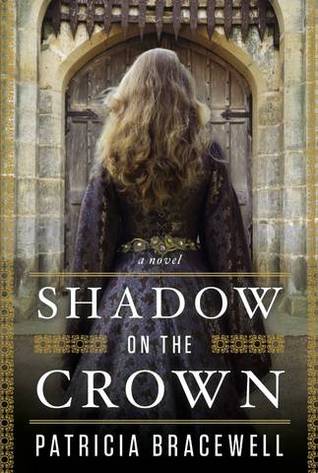
    • Book Review: “Shadow on the Crown” by Patricia Bracewell

      Posted at 2:07 pm by Laura, on March 5, 2013

      Shadow on the Crown by Patricia Bracewell 15752152

      Publisher: Viking
      Publishing Date: February 2013
      Genre: historical fiction
      ISBN: 9780670026395
      Goodreads: 4.01
      Rating: 
      ★★★★★

      In 1002, fifteen­-year-old Emma of Normandy crosses the Narrow Sea to wed the much older King Athelred of England, whom she meets for the first time at the church door. Thrust into an unfamiliar and treacherous court, with a husband who mistrusts her, stepsons who resent her and a bewitching rival who covets her crown, Emma must defend herself against her enemies and secure her status as queen by bearing a son.

      Determined to outmaneuver her adversaries, Emma forges alliances with influential men at court and wins the affection of the English people. But her growing love for a man who is not her husband and the imminent threat of a Viking invasion jeopardize both her crown and her life.

      Based on real events recorded in the Anglo-Saxon Chronicle, Shadow on the Crown introduces readers to a fascinating, overlooked period of history and an unforgettable heroine whose quest to find her place in the world will resonate with modern readers.

      Emma, sister of Duke Richard of Normandy, is sent to become England’s queen and wife of King Æthelred II — otherwise known as Æthelred the Unready. Hoping this marriage would bring about peace and trust between Normandy and England, and an allied front against the Vikings, Emma quickly forges alliances with nobles and clergy to solidify respect and honor due her. As months and years pass, and the threat of Danish ships striking England with each passing season, Emma begins to feel her power over Æthelred and England rise and fall.

      The first of a well-researched and excellently crafted trilogy, Bracewell sheds light on the first queen of England that shaped the history we know today. She is the aunt of William the Conqueror and mother of Edward the Confessor. While the names and events are taken directly from The Anglo-Saxon Chronicle, Bracewell took liberties with theories floating around in historical debates and fictionalizes the missing pieces. In her author’s note, she states which bits are heavily fictionalized — affairs, character personalities — and which have some bits of truth that needed to be fleshed out. For anyone interested in English history, this is the novel to read.

      The language is steeped in historical accuracy. Old English names, such as Æthelstan, Ælfgifu, Wulfhilde, and Ælfric, as well as Old English words, like wyrd, ætheling, cyrtel, and skald, help to shape the culture and place the reader deep in the early 1000s, when kings were chosen by God, prayers and Christian strength could change the turn of events, and pagan prophecies and curses loomed around every corner. The portions of the book I found difficult to read but understood its historical accuracy dealt with rape and the mistreatment of women. I had to remind myself that women were considered property, sometimes even less than property. Men could rape, hit, throw, and threaten women to get their way, even if the woman was a queen, a lady, a servant, or even a sister or daughter. But I must say, these women knew the power they could have over men, and used it to their advantage. They were angered about their mistreatment (and yes, accepted it, as was true of the times), but always rose up and became stronger from it. Even Emma, after her first experience in the hands of rage, went through a period of self-hate before forming a steel-hard shield around her emotions.

      Moving on.

      I thought Bracewell’s use of perspective was fantastic, as well. Although the story is about Emma, we also peek into Æthelred’s tortured mind — his mistrust of everyone, the hauntings of his past, his twisted logic — and his son Æthelstan’s torn heart — his love for Emma, his desire to take the throne due to his father’s ill-management of the country. We also peek into Elgiva’s mind, the daughter of the ealdorman of Northumbria, and watch as she tries to make her presence known in the royal court. History has something far different for her in store, and the reader can only assume its her father’s doing. These different perspectives, including Emma’s, allow the reader to see the corruption in royal courts. No one directly states what they are thinking. Every word spoken is masked with hidden meanings, and thus all actions and interpretations are misconstrued. It was interesting to see how twisted Æthelred would misunderstand Emma’s good intentions, or how Emma would misread Æthelstan’s desires.

      I am really looking forward to the second and third books. This novel sparked far more interest in English history than I ever thought possible, and now that I know what will happen soon to Emma — and after glimpsing some of those historical people pop up in the book as characters — I want to see how Bracewell weaves history and fiction together to create a beautiful new chronicle of Emma’s life. I highly recommend this book. A wonderful read.

      Posted in books, Reviews 2013 | 0 Comments | Tagged book review, books, genre: adult fiction, genre: fiction, genre: history, goodreads, review
    • Book Review: “Little Women” by Louisa May Alcott

      Posted at 4:28 pm by Laura, on February 28, 2013

      Little Women by Louisa May Alcott LittleWomen.qx5.EG

      Published: “Little Women” 1868, “Good Wives” 1869
      Publisher: originally Roberts Brothers
      Genre: American classics
      ISBN: [varies]
      Goodreads: 3.97
      Rating: 
      ★

      Disclaimer: As this review may be harsh, please note that this was the first time I read it, and am not a fan of nineteenth-century American literature in the first place. My particular fondness lies in nineteenth-century British literature, as the writing style and its rhythm, in my opinion, are far more cultivated. Immense spoilers ahead.

      This near-autobiographical novel follows the lives of sisters Meg, Jo, Beth, and Amy March across several years during and after the American Civil War just outside of New England. Meg is the eldest, very beautiful, and knows how to run a household. Her domestic qualities and patience with children aid her in finding a husband, although by the end of Part II (Good Wives) Meg feels caged in this domestic sphere and attempts to find the silver-lining in her situation. Jo, the tomboy of the family, is quick to anger but vastly creative. She pursues friendship and a self-sustaining career over the domestic life. She scoffs at Theodore “Teddy” “Laurie” Lawrence’s proposal, and falls into the arms of The Professor, and older, German, scholarly man and claims it is love. Beth, quiet, subservient, and gentle, is everyone’s pet. She is beloved by all, but very weak and is ill throughout the novel. She seems to fill the role of the pitied woman, the beautiful but poor creature, the angel no one dares to scar with life’s difficulties. Amy, spoiled and the youngest of the family, desiring wealth and trinkets, is adored and indulged for her fantasies and wishes. When Jo turns away Laurie, Laurie runs to Amy instead, knowing his wealth and knowledge would bring comfort to her.

      Alcott wrote Little Women in six weeks. After its success, she wrote Good Wives, the second part to Little Women and now published in one collective volume, and had it published within the year. She wrote a chapter a day for Good Wives, and it certainly looks like that. The writing is very plain and drab. Alcott may have been an editor, but she did not seem to have a grasp for intricate plotting.

      One of the qualities I admire in nineteenth-century British literature is that you’re guaranteed a plot or adventure of some sort. A mystery, a scandal to discover, a marriage to form or break, an inheritance to gain. From the first few chapters, the reader can grasp the plot and run along with it. There’s a desire to read all the way to the end, because the plot is invested in something and only the end can reveal it all.

      With Alcott’s Little Women, particularly part one, there was no plot whatsoever. It opens with the girls complaining about being poor on Christmas. It follows their day-to-day lives. There is no sense of direction or ending. It was nice to read about the blossoming friendship between Laurie and Jo, the tension and platonic or romantic love around the two of them, but there was no path for the novel to take. The only glimpse the reader gets of a war even happening is when Father is ill on the front. That is it.

      In part two, it felt indulgent. Indulgent towards the readers of the time that begged for more. It was also incredibly preachy. Every chapter, even in part one, had a moral to it that the characters shrugged after discovering it and said, “Well, I did wrong, now I know what to do right, and I shall do it from now on! Hurray!” Even Alcott must have been told she had too many moral stories, and clearly she didn’t give a damn:

      [Jo] looked at the marked passages and was surprised to find that all the moral reflections — which she had carefully put in as ballast for much romance — had been stricken out.

      “But, sir, I thought every story should have some sort of moral, so I took care to have a few of my sinners repent.”

      “People want to be amused, not preached at, you know. Morals don’t sell nowadays;” which was not quite a correct statement, by the way.

      Really, Alcott? I’m sure most of the readers begging for more of the March sisters wanted to see Laurie and Jo marry. I know I certainly was. I had hoped the direction this novel was taking was towards a wedding between the two. They know each other so well, they have mutual love and respect for one another, and a deep understanding. It was jarring to watch Jo cast Laurie aside and instead go for a dull, less invested man. It hurt to read Laurie calling Amy a decent replacement for Jo.

      I understand that Alcott was trying to make a statement about the outcomes of women’s lives in that time. One marries and either lives happily and securely in wealth, contented and poor but somewhat independently, or at first for love that is later ruined and broken. And Beth’s role felt snubbed too. That the best of women suffer the greatest, and simply live to show others the good moral path: to be self-sacrificing and serving others always.

      It did not leave me feeling empowered like I do with Jane Eyre; I was not left with passion like I do with Wuthering Heights; there was no examination and acceptance of crossing gender roles like in Woman in White; and there was no examination of the realistic economic, political, and personal struggles like in David Copperfield. I was disappointed. Fans of Alcott may have read this when they were younger. I can see this writing style appealing to younger crowds. But as I’m older, and this is my first read, I was left wanting. With little plot, too much preaching, and an unrealistic and unsatisfactory ending for the characters properly suited to others, I’m sad to say I did not enjoy this book in the least.

      Posted in books, Reviews 2013 | 1 Comment | Tagged book review, books, genre: classics, goodreads, review
    • Keeping Brick-and-Mortar Stores in Business: A FAQ

      Posted at 9:45 am by Laura, on February 28, 2013

      In light of the news that Barnes & Noble will be closing a third of their stores across 10 years, that Nook may be separating from B&N, that independent bookstores are few and far between, allow this bookseller to answer the age-old question, “How can I keep bookstores from closing?” (which, of course, stems from the statement, “I wish bookstores weren’t closing!”).

      The best and most obvious answer is purchase directly in the bookstore.

      Seriously. I’m sick of explaining to people why we sell books at the sticker price, why prices are “high,” why online is cheaper than in store. As I cannot take out my frustration on our patrons, I’m going to step up with booksellers everywhere — including independent and used bookstore booksellers — and explain all these questions.

      1. Why are online prices cheaper?

      If a bookstore, like Barnes & Noble or Waterstones, has an online presence, the prices for the products are generally cheaper. This is because the consumer is going directly to the vendor — which has far fewer employees — and ordering from there. Whether or not one is a special member of some sort for this online bookstore, there is still the expectation that one will pay for shipping. The price offered is the lowest price that can still be split among the publisher, the author, and the bookseller.

      When the consumer purchases in the store, they are paying for “overhead.” Overhead is payment towards the rent/lease of the venue, payment towards the helpful employees, payment for the upkeep and cleanliness of the venue, as well as the publisher, the author, and the bookseller corporation.

      If consumers continuously purchase online rather than walking into the store, the store’s physical presence declines and thus they close. Chain bookstores live with a double-edged sword: online presence can boost sales, but it can also aid in store closings.

      2. Why are so many indie/used bookstores closing?

      Most independent bookstores and used bookstores use a mathematical formula to lower the sticker price to it’s lowest possible value before harming their sales. Say you spot a rare edition of a book by an author you love. The original sticker price is $25, but the indie store is selling it for $15 and the used store is selling it for $10. The indie store will make a small profit from selling this book, but the majority will still be sent to the publisher and author. The used bookstore is barely making enough profit to keep the place running, but nothing goes toward the publisher or author.

      A lot of independent and used bookstores are closing because consumers still find cheaper prices online.   The stores’ prices are also heavily dependent on scraping by: keeping employees employed, paying venue rent, keeping the place in good condition and clean. If you want your mom-and-pop, independent, or used bookstore to stay in business (either because you like the cozy atmosphere, it’s location, the selection, or even it’s nice low prices), you need to walk into their store and purchase from them directly.

      3. But I like Amazon’s prices! Why should I, the consumer, not use Amazon?

      Mention Amazon to a bookseller and we do everything we can to not explode with anger. Those stiff smiles, blank stares, and suddenly curt speech are the only acceptable ways for us to express our dislike.

      Amazon never sells at the sticker price. They are an online presence, not a physical presence. They make enough profit off shipping and other products to keep themselves in business. [Refer to Answer #1 on online prices.] Great on them. They’re a monopoly.

      But the prices they offer, including the used ones, rarely — if ever — benefit the publisher, the author, or anyone else in the book business. Yes, the prices are miraculously cheaper and in this economy everyone wants the cheaper price. But consistently purchasing from Amazon only creates a larger monopoly, creates a business that will not help you in person, and drastically lowers the likelihood of a brick-and-mortar store staying in business near you.

      Sidenote: This is for all those cranky customers who say to booksellers, “Ugh, I had to drive 30 minutes out here just to get to this store and you’re telling me you don’t have this book?! This is why Amazon is in business; I’m ordering from them!” No, Amazon is not in business because we’re 30 minutes away — we’re 30 minutes away because consumers like you consistently purchase from Amazon and we have to close our stores closest to you.

      4. If booksellers frown on Amazon, what are some other online groups with low prices that booksellers don’t get angry over?

      I’m glad you asked!

      Better World Books “collect and sell books online to donate books and fund literacy initiatives worldwide.”

      Books sold on BetterWorldBooks.com help fund high-impact literacy projects in the United States and around the world. That’s why we commit to matching every purchase on our website with a book donation to someone in need.

      What sane bookseller would say no to that?! Literacy is something to support and celebrate!

      AbeBooks has some amazingly cheap prices on everything. They help those independent booksellers get their presence known. Small stores, nationwide and worldwide, advertise the availability of a new/used book they have in stock. When you purchase through AbeBooks, you’re benefitting this organization as well as the small seller.

      Alibris also helps independent sellers stay in business by connecting them across the globe and aiding in library collections.

      Biblio is also fantastic — a large selection of rare books, connecting indie and used stores across the country. They also help in non-profit organizations.

      —-

      So. You want your bookstore to stay in business? Go in the bookstore and purchase from them today.

      Posted in books, library, Link, publishing, technology, Update Post | 0 Comments | Tagged books, bookstores, library, news, personal, publishing
    • Book Review: “The Tragedy Paper” by Elizabeth LaBan

      Posted at 11:04 am by Laura, on February 25, 2013

      The Tragedy Paper by Elizabeth LaBan 13628178

      Publisher: Knopf
      Publishing Date: January 2013
      Genre: young adult
      ISBN: 9780375870408
      Goodreads: 3.83
      Rating: 
      ★★★★

      Tim Macbeth, a seventeen-year-old albino and a recent transfer to the prestigious Irving School, where the motto is “Enter here to be and find a friend.” A friend is the last thing Tim expects or wants—he just hopes to get through his senior year unnoticed. Yet, despite his efforts to blend into the background, he finds himself falling for the quintessential “It” girl, Vanessa Sheller, girlfriend of Irving’s most popular boy. To Tim’s surprise, Vanessa is into him, too, but she can kiss her social status goodbye if anyone ever finds out. Tim and Vanessa begin a clandestine romance, but looming over them is the Tragedy Paper, Irving’s version of a senior year thesis, assigned by the school’s least forgiving teacher.

      Tim, a relatively confident and good-hearted teenage boy, transfers to Irving School for his final semester of senior year in hopes that his social outcast days as an albino will be gone. At the airport, he runs into the energetic Vanessa, and they strike a sweet and unlikely friendship. When they realize they’re going to be classmates, and Vanessa’s popular but near-abusive athletic boyfriend catches a whiff of their friendship, everything is set on edge. Told through two perspectives — Tim, through CD recordings he left for Duncan, and Duncan, the present-day senior and then-junior in Tim’s story — this heartbreaking story of first love and first tragedy will make your soul ache for a happy resolve.

      First and foremost, the summary provided by the publisher is misleading. Tim wants to be unnoticed for his albino traits, specifically; he desperately wants friends. Vanessa never outright states she would never be with Tim because of her social status. In fact, Tim is quite friendly with the other students, and they reciprocate. The part Vanessa would have to kiss goodbye is her complicated and abusive relationship with her boyfriend — he’s difficult to let go and both Vanessa and Tim know that a break-up from Vanessa would only lead to violence on Patrick’s part. Their extremely close friendship is more of a secret from Patrick rather than the school. Finally, the teacher who assigns the Tragedy Paper is not “the least forgiving” — no, students love him! He’s fun and entertaining and loves to bake! What’s unforgiving is the paper he assigns.

      Phew. With that out of the way, time for a review of the story.

      I love how Tim is portrayed. We sympathize with him just like any other protagonist — we want what he wants, we fear what he fears. I’m glad LaBan did not make Tim self-pitying about his being albino. There were moments of insecurity, just like any other teenager would have, about his appearance. His life was most crippling through his eyes, as they’re far more sensitive to light than those of us with pigmentation and other sorts of protection. It’s what I can only guess as an accurate portrayal of an albino: they worry about their fair skin, light eyes, and weak sight, but they are no different in any other way when it comes to daily life. LaBan could have easily made Tim whine and moan but she didn’t. That was fantastic.

      The tense moments between Patrick and Tim had me on edge. You never knew if Patrick would end up saying or doing something to Vanessa after conversations with Tim, or if he would attack Tim at any moment. Tim, though an outcast in more ways than one, was very perceptive of Patrick’s quick moods and danced around them effortlessly. He was cautious, but brave.

      My least favorite character was Duncan. I could have done without his narrative. Tim’s voice, first person and recorded on CD (which we were reminded of throughout with phrases and interjections like “I know you were there and saw what happened but I just need to explain my story” or “You may have heard this rumor but let me set this straight”), was interesting, interactive, inviting, soothing, and even foreboding. Duncan, third person perspective, was dull and underdeveloped. Thankfully he’s not in there very long. The parallel story-lines helped amp the sense of dread, but I think this book could have worked just fine without Duncan’s perspective.

      This was a book I could not put down. I ache to hear Tim’s voice.

      Posted in books, Reviews 2013 | 0 Comments | Tagged book review, books, genre: young adult, goodreads, review
    • World Book Night 2013!

      Posted at 9:15 am by Laura, on February 25, 2013

      This will be my second year as a World Book Night Book Giver, and I am beyond excited! Last year, I handed out The Hunger Games to students on campus and had such a blast. The movie released a few days prior, which was incredibly helpful in getting people interested about the book.

      This year I’m giving away John Green’s Looking for Alaska, the book that won awards, that was surrounded by controversy, that labeled John Green as an established author prior to the success of The Fault in Our Stars. I think I’m going to use that to my advantage when handing out the books and getting excited about reading. Looking for Alaska was THE BOOK nerdfighters chose to initiate new nerdfighters. And with the success of TFiOS (posters all over Barnes & Nobles across the nation, New York Times bestseller, best fiction of 2012), I think I can get more people interested as they’ll recognize Green’s name from all of the talk.

      Oooooh, I can’t wait to head out and spread the word!

      Are you a WBN giver? What book are you sharing with the world?

      Posted in books, Link, Update Post | 3 Comments | Tagged books, world book night
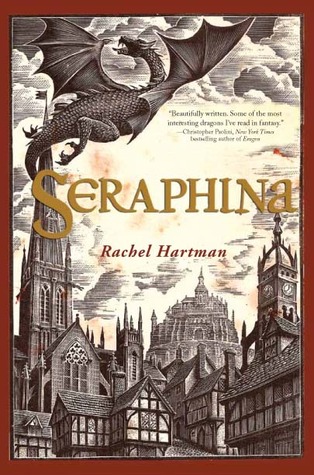
    • Book Review: “Seraphina” by Rachel Hartman

      Posted at 8:43 am by Laura, on February 22, 2013

      Seraphina by Rachel Hartman 12394100

      Publisher: Random House
      Publishing Date: July 2012
      Genre: young adult, fantasy
      ISBN: 9780375866562
      Goodreads: 4.12
      Rating: 
      ★★★★★

      Four decades of peace have done little to ease the mistrust between humans and dragons in the kingdom of Goredd. Folding themselves into human shape, dragons attend court as ambassadors, and lend their rational, mathematical minds to universities as scholars and teachers. As the treaty’s anniversary draws near, however, tensions are high.

      Seraphina Dombegh has reason to fear both sides. An unusually gifted musician, she joins the court just as a member of the royal family is murdered—in suspiciously draconian fashion. Seraphina is drawn into the investigation, partnering with the captain of the Queen’s Guard, the dangerously perceptive Prince Lucian Kiggs. While they begin to uncover hints of a sinister plot to destroy the peace, Seraphina struggles to protect her own secret, the secret behind her musical gift, one so terrible that its discovery could mean her very life.

      Seraphina, a remarkable musician and uniquely perceptive human, joins the Goredd court as Music Mistress, assistant to the royal court composer. Her arrival coincides with the death of Prince Rufus, an honorable man who aimed to maintain peace between the dragons and Goreddis. With the help of her teacher Orma, a dragon in human form, and her friends Prince Lucian Kiggs and Princess Glisselda, Seraphina helps to uncover the mystery behind Prince Rufus’s murder while keeping her own dragon secrets under wraps. The fate of the kingdom and its uneasy relations with dragons falls on her shoulders.

      Seraphina is a wonderfully fantastic conglomeration of medieval lifestyle, Restoration-esque religious zeal, steampunk machinery, Enlightenment philosophy, beautifully lush musical diction, and high fantasy atmosphere. Phew. It may seem daunting and overwhelming, this 450-page first installment, but the second the reader steps into Seraphina’s inquisitive and perceptive mind, one becomes part of that world. The language, the scenery, the lifestyle — it all becomes incredibly familiar, as if one has lived this sort of life before. This novel was refreshing. Young adult high fantasy, written well, is very rare. Hartman wrote the book seeming to understand that young adult readers can be intelligent too, can desire the full range of emotional complexity, can understand rich diction, and can hear the music described in the book in their heads. Oh, it was wonderful!

      Though there are no dragons in the real world, Seraphina’s struggles as half dragon are immensely relatable. This is a coming-of-age piece, a true painting of self-discovery and self-acceptance. We journey through her neat separation of living the life of an ordinary human, and jumping over to her teacher Orma’s instructions on how to maintain “ard” (a calming, logical, meditative state dragons accomplish) so that her dragon side is under control. As the story progresses, these two parts of her life merge, and she must come to an understanding with who she is in order to move forward.

      The saints, slang, and cast of characters are introduced and given a brief description quite early in the book and rarely explained again. A massive thanks to Hartman for providing a glossary at the back of the book, containing the index of characters, the saints and what they are for, and the human and dragon slang in Goredd. Halfway through the book I stopped referring to this helpful section because it was no longer necessary to understand the story. Hartman truly immerses the reader into the world.

      Absolutely stunning.

      Posted in books, Reviews 2013 | 0 Comments | Tagged book review, books, genre: fantasy, genre: young adult, goodreads, review
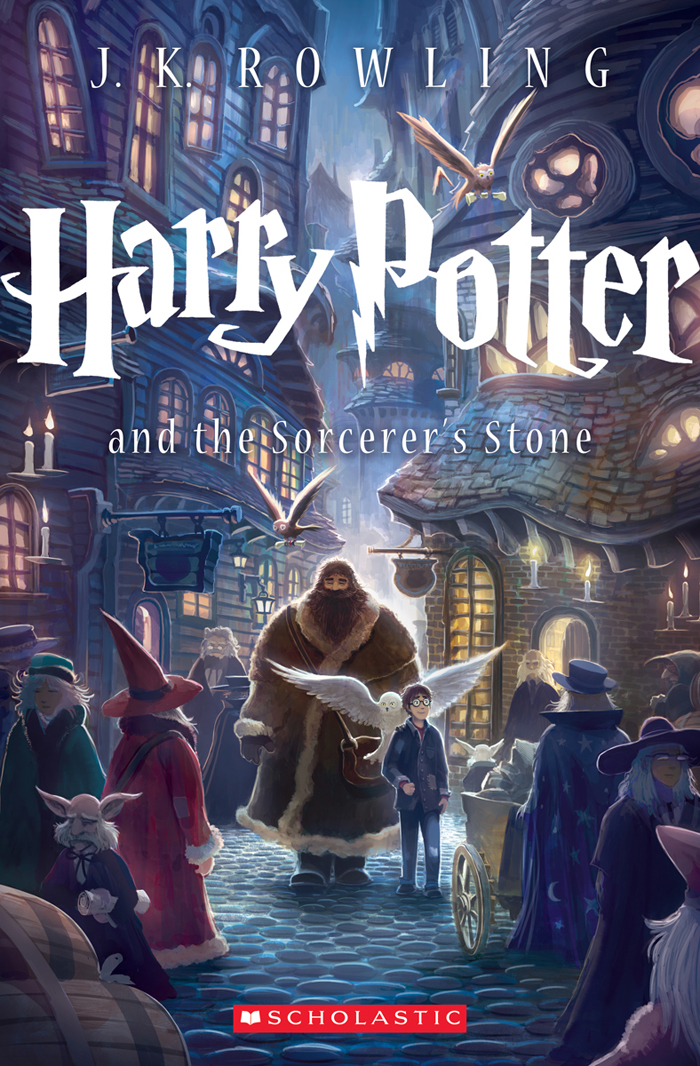
    • New Harry Potter Cover!

      Posted at 5:03 pm by Laura, on February 13, 2013

      A New Look for Harry Potter — Publishers Weekly — Shannon Maughan

      Though the assignment was daunting at first, Kibuishi says he started thinking about the Harry Potter books “as if I was looking back at them from the future. I wanted to pay tribute to the series itself and to classic literature. I wanted to take those two things and fuse them together. In a way, the first Harry Potter cover should feel like Dickens.”

      Posted in books, Link, publishing | 3 Comments | Tagged art, books, publishing
    • Bookish – A Magical Place

      Posted at 12:41 pm by Laura, on February 11, 2013

      Have you encountered Bookish?

      Bookish is an organization founded by Penguin, Hachette, and Simon & Schuster. The purpose is to promote books and help bookworms find their next best pick. In light of bookstores closing, these publishers created this fantastic website that helps personalize the reader’s interests. Get the latest news from authors, editors, and publishers!

      Check out their twitter, @BookishHQ.

      They were recently featured in Wall Street Journal.  Check it out!

      Posted in books, Link, publishing, technology | 0 Comments | Tagged books, ebooks, news, publishing
    • DOJ Case Settled

      Posted at 8:03 pm by Laura, on February 8, 2013

      At least, that certainly seems to be the case.

      Department of Justice appears to have settled with publishers in the ebook pricing case. What does this mean for the future of ebooks?

      Apple has also said in court papers that the government’s suit “sides with monopoly, rather than competition,” by shoring up Amazon’s early advantage in electronic books.

      A civil trial for Apple is scheduled to begin in June.

      Bookseller Barnes & Noble Inc has sided with Apple, telling the federal court that it, too, is concerned about a monopoly by Amazon.

      This is another issue with ebook pricing. Amazon is already an egotistical monopoly in the book world. Rather than going to a local or independent bookstore, customers rush to Amazon because it’s “cheaper.” Then those same customers complain about bookstores closing. How does one fix this? Utilize the local bookstore!

      Writers are worried about not making enough money on their books because of this monopoly. They know customers want small prices, and ordering through Amazon completely cuts out the royalties for authors and all their hard work. So now authors have turned to self-publishing ebooks, as they can still make money off ebooks.

      BUT NOW Amazon is trying to sell “used” ebooks, which is not actually a thing AND it cuts out royalties for authors once again!

      Obviously this post veered off-topic, but as a reader, who do you support? Do you want to support the writers and editors who work so hard to make good quality books for you to learn from and enjoy? Or do you want to feed a monopoly that is actually killing the industry?

      Some food for thought. Back to the DOJ deal…

      Posted in books, Link, publishing, technology | 0 Comments | Tagged books, ebooks, legal issues, news, publishing
    ← Older posts
    Newer posts →
    • Hello, I’m Laura!

      I'm a bookish bookworm and book hoarder. By day I'm a literary agent, and by night I'm forever rearranging my bookshelves. I could talk your ear off about Gothic literature, and in my past life people thought I'd become a professional musician. I have a fluffy black cat named Rossetti, I love to travel, tea is my drink of choice, British TV is the best, and I'm always down for chips-and-queso nights. Welcome to Scribbles & Wanderlust! Grab your favorite hot beverage and let's chat books!
    • Search the Blog

    • Currently Reading

    • Book Review Rating Key

      ★★★ — It’s good
      ★★★★ — It’s great
      ★★★★★ — OMG LOVE!!!

    • Recent Posts

      • MSWL for 2026
      • Favorite Reads of 2025
      • Deal Announcement: Nina Moreno, YA Romance
      • Deal Announcement: Sharon Choe, YA Fantasy
      • Deal Announcement: Hanna R. Neier, MG Historical/Contemporary

Blog at WordPress.com.

Scribbles & Wanderlust
Blog at WordPress.com.
  • Subscribe Subscribed
    • Scribbles & Wanderlust
    • Join 1,202 other subscribers
    • Already have a WordPress.com account? Log in now.
    • Scribbles & Wanderlust
    • Subscribe Subscribed
    • Sign up
    • Log in
    • Report this content
    • View site in Reader
    • Manage subscriptions
    • Collapse this bar
 

Loading Comments...