According to USA TODAY’s Best-Selling Books list, The Hunger Games by Suzanne Collins is No. 1!
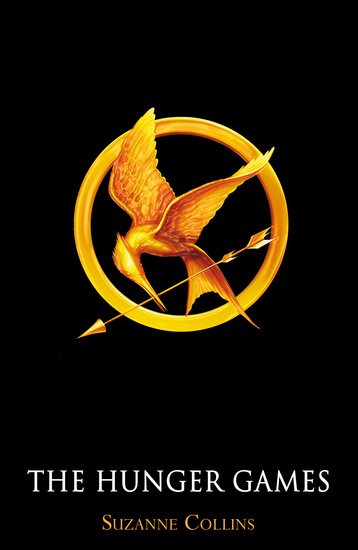 Other books that made the Top Five list include The Girl With the Dragon Tattoo and The Help.

According to USA TODAY’s Best-Selling Books list, The Hunger Games by Suzanne Collins is No. 1!
Other books that made the Top Five list include The Girl With the Dragon Tattoo and The Help.
2011 trends in fiction, the fate of books and ebooks, and the forecast of independent bookstores – all discussed with The Washington Post book critic Ron Charles in a short 7-minute video on PBS.
Reading 55 Books in 2011: What I learned – Publisher’s Weekly – Gabe Habash
This isn’t publishing news, per se, but it is an excellent and detailed account of what goes on across the year when setting a goal to read x-many books. Nearly everything Habash states (forgetting certain details of books that moved you at the beginning of the year, doing the math, pushing for x+ books once the goal seemed attainable) is similar to what I went through during the 50 Book Challenge. That, and he promotes GoodReads!
At the time of this writing, I have a beard and I’m finishing up The Colossus of New York. It’s the last book I’ll read this year, which started off innocently enough in January, but by winter became something of a maddening ascetic bender. This is what I learned from reading 15,000 pages in 2011.
He discusses poor memory and the pros and cons of reading goals. Cool blog post!
What will your goal be for 2012?
Publisher’s vs Libraries: An E-Book Tug of War – The New York Times – Randall Stross
To follow along with the library/publisher/ebook trend today…
…we can also guess that the number of visitors to the e-book sections of public libraries’ Web sites is about to set a record, too.
And that is a source of great worry for publishers. In their eyes, borrowing an e-book from a library has been too easy. Worried that people will click to borrow an e-book from a library rather than click to buy it, almost all major publishers in the United States now block libraries’ access to the e-book form of either all of their titles or their most recently published ones.
When Borrowing Isn’t Free – Publisher’s Weekly – Peter Brantley
Wheeler’s is a private company developing an e-book platform that enables libraries to charge for e-book lending. And, another critical feature, it also offers support for the outright purchase of e-book titles from book distributors, versus licensing. In addition to clarifying the legal status of e-books in a library collection, “purchasing” the e-book also permits libraries to be more flexible with their funding, in comparison to paying recurring license fees. Further, the ability to charge patrons for e-book rentals generates friction in lending, and helps to compensate libraries for the costs of ebook purchasing.
Could an experiment in New Zealand help US libraries and publishers come together on ebooks?
Barnes & Noble shared an interesting history behind Dickens’s A Christmas Carol.
Since its publication, A Christmas Carol has been adapted into countless plays, films, and television productions. But many scholars believe it also fundamentally changed the way we view the holiday season. In a few short pages, Dickens managed to create a vision of old-fashioned good cheer and secular morality. But what’s most remarkable about the story is what it leaves out.
Read on for the full story!
The great ebook price swindle – The Guardian – Dan Gillmor
Publishers have two major distribution methods. One is traditional wholesaling: sell the book to a middleman, who typically adds a mark-up to customers, but sometimes discounts a book below cost as a “loss leader” to attract more business for items that aren’t discounted in this way.
The other model is called the “agency” system. In this case, publishers set the price and the bookstore merely handles the sale to the ultimate customer, for a set fee or percentage of the transaction.
The “big six” US publishers all sell their physical books via the wholesale model. After years of wholesaling digital editions as well, they moved to the agency model for ebooks, with Random House becoming the final publisher to switch early last year.
…An ebook priced like a physical book is a terrible deal for the customer. Among other drawbacks, you can’t resell – or even give away – an ebook in most cases. You don’t really own an ebook; you’re just renting it, even if the company you rent from says you can keep it, because that depends on the life span of the seller.
Read on to see why “publishers are facing an uncertain time in the digital world – but increasing the prices of their ebooks is a retrograde step.”
Register for World Book Night 2012 and be a giver!
World Book Night launched in the UK in 2011 and saw passionate readers across that beautiful country, give 1 million books to light or non readers to spread the joy and love of reading. Reading changes lives and at the heart of World Book Night lies the simplest of ideas and acts – that of putting a book into another person’s hand and saying ‘this one’s amazing, you have to read it’.
Now, it’s our time to join the cause.
World Book Night 2012 will be held on April 23 – in the US and the UK – and we’re looking for 50,000 volunteer book givers to hand out 20 copies each – for a total of 1 million free special World Book Night paperbacks!
There is a fantastic list of books up for grabs, including Orson Scott Card’s Ender’s Game, Maya Angelou’s I Know Why the Caged Bird Sings, Suzanne Collins’s Hunger Games, Jodi Picoult’s My Sister’s Keeper, and Markus Zusak’s The Book Thief. Fill out the application to become a volunteer giver!
No, You’re Getting a Book – The New York Times Opinion Pages – Kyle Jarrard
A book allows you to time-travel, or just plain travel to real and imagined places, a not un-neat trick considering the price of airline tickets or space tourism. It allows you to meet evil, wonderful, mysterious, odd, crazy, fun, and not-fun people who often end up being more “real” in your life than real people. A simple tome of paper links you back, for instance, to the age of François I, Renaissance poet and book collector supremo, when the printing press and its wild spread across Europe was as exciting to us all as are e-books today.


 Scribbles & Wanderlust