Scribbles & Wanderlust
  • Home
  • About
  • Clients and Representation
  • Book Reviews
    • Reviews 2012
    • Reviews 2013
    • Reviews 2014
    • Reviews 2015
    • Reviews 2016
    • Reviews 2017
    • Reviews 2018
    • Reviews 2019
    • Reviews 2020
    • Reviews 2021
    • Reviews 2022
    • Reviews 2023
    • Reviews 2024
    • Reviews 2025
  • Features
    • Deal Announcement
    • End of Year Book Survey
    • If We Were Having Coffee
    • This Season’s Rewind
  • Discover a New Read
    • Adult
    • Young Adult
    • Middle Grade
  • Tag: book review

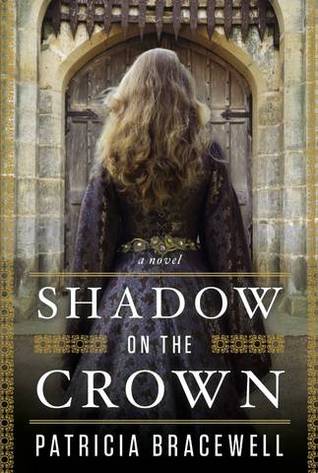
    • Book Review: “Shadow on the Crown” by Patricia Bracewell

      Posted at 2:07 pm by Laura, on March 5, 2013

      Shadow on the Crown by Patricia Bracewell 15752152
      Publisher: Viking
      Publishing Date: February 2013
      Genre: historical fiction
      ISBN: 9780670026395
      Goodreads: 4.01
      Rating: 
      ★★★★★

      In 1002, fifteen­-year-old Emma of Normandy crosses the Narrow Sea to wed the much older King Athelred of England, whom she meets for the first time at the church door. Thrust into an unfamiliar and treacherous court, with a husband who mistrusts her, stepsons who resent her and a bewitching rival who covets her crown, Emma must defend herself against her enemies and secure her status as queen by bearing a son.

      Determined to outmaneuver her adversaries, Emma forges alliances with influential men at court and wins the affection of the English people. But her growing love for a man who is not her husband and the imminent threat of a Viking invasion jeopardize both her crown and her life.

      Based on real events recorded in the Anglo-Saxon Chronicle, Shadow on the Crown introduces readers to a fascinating, overlooked period of history and an unforgettable heroine whose quest to find her place in the world will resonate with modern readers.

      Emma, sister of Duke Richard of Normandy, is sent to become England’s queen and wife of King Æthelred II — otherwise known as Æthelred the Unready. Hoping this marriage would bring about peace and trust between Normandy and England, and an allied front against the Vikings, Emma quickly forges alliances with nobles and clergy to solidify respect and honor due her. As months and years pass, and the threat of Danish ships striking England with each passing season, Emma begins to feel her power over Æthelred and England rise and fall.

      The first of a well-researched and excellently crafted trilogy, Bracewell sheds light on the first queen of England that shaped the history we know today. She is the aunt of William the Conqueror and mother of Edward the Confessor. While the names and events are taken directly from The Anglo-Saxon Chronicle, Bracewell took liberties with theories floating around in historical debates and fictionalizes the missing pieces. In her author’s note, she states which bits are heavily fictionalized — affairs, character personalities — and which have some bits of truth that needed to be fleshed out. For anyone interested in English history, this is the novel to read.

      The language is steeped in historical accuracy. Old English names, such as Æthelstan, Ælfgifu, Wulfhilde, and Ælfric, as well as Old English words, like wyrd, ætheling, cyrtel, and skald, help to shape the culture and place the reader deep in the early 1000s, when kings were chosen by God, prayers and Christian strength could change the turn of events, and pagan prophecies and curses loomed around every corner. The portions of the book I found difficult to read but understood its historical accuracy dealt with rape and the mistreatment of women. I had to remind myself that women were considered property, sometimes even less than property. Men could rape, hit, throw, and threaten women to get their way, even if the woman was a queen, a lady, a servant, or even a sister or daughter. But I must say, these women knew the power they could have over men, and used it to their advantage. They were angered about their mistreatment (and yes, accepted it, as was true of the times), but always rose up and became stronger from it. Even Emma, after her first experience in the hands of rage, went through a period of self-hate before forming a steel-hard shield around her emotions.

      Moving on.

      I thought Bracewell’s use of perspective was fantastic, as well. Although the story is about Emma, we also peek into Æthelred’s tortured mind — his mistrust of everyone, the hauntings of his past, his twisted logic — and his son Æthelstan’s torn heart — his love for Emma, his desire to take the throne due to his father’s ill-management of the country. We also peek into Elgiva’s mind, the daughter of the ealdorman of Northumbria, and watch as she tries to make her presence known in the royal court. History has something far different for her in store, and the reader can only assume its her father’s doing. These different perspectives, including Emma’s, allow the reader to see the corruption in royal courts. No one directly states what they are thinking. Every word spoken is masked with hidden meanings, and thus all actions and interpretations are misconstrued. It was interesting to see how twisted Æthelred would misunderstand Emma’s good intentions, or how Emma would misread Æthelstan’s desires.

      I am really looking forward to the second and third books. This novel sparked far more interest in English history than I ever thought possible, and now that I know what will happen soon to Emma — and after glimpsing some of those historical people pop up in the book as characters — I want to see how Bracewell weaves history and fiction together to create a beautiful new chronicle of Emma’s life. I highly recommend this book. A wonderful read.

      Posted in books, Reviews 2013 | 0 Comments | Tagged book review, books, genre: adult fiction, genre: fiction, genre: history, goodreads, review
    • Book Review: “Little Women” by Louisa May Alcott

      Posted at 4:28 pm by Laura, on February 28, 2013

      Little Women by Louisa May Alcott LittleWomen.qx5.EG

      Published: “Little Women” 1868, “Good Wives” 1869
      Publisher: originally Roberts Brothers
      Genre: American classics
      ISBN: [varies]
      Goodreads: 3.97
      Rating: 
      ★

      Disclaimer: As this review may be harsh, please note that this was the first time I read it, and am not a fan of nineteenth-century American literature in the first place. My particular fondness lies in nineteenth-century British literature, as the writing style and its rhythm, in my opinion, are far more cultivated. Immense spoilers ahead.

      This near-autobiographical novel follows the lives of sisters Meg, Jo, Beth, and Amy March across several years during and after the American Civil War just outside of New England. Meg is the eldest, very beautiful, and knows how to run a household. Her domestic qualities and patience with children aid her in finding a husband, although by the end of Part II (Good Wives) Meg feels caged in this domestic sphere and attempts to find the silver-lining in her situation. Jo, the tomboy of the family, is quick to anger but vastly creative. She pursues friendship and a self-sustaining career over the domestic life. She scoffs at Theodore “Teddy” “Laurie” Lawrence’s proposal, and falls into the arms of The Professor, and older, German, scholarly man and claims it is love. Beth, quiet, subservient, and gentle, is everyone’s pet. She is beloved by all, but very weak and is ill throughout the novel. She seems to fill the role of the pitied woman, the beautiful but poor creature, the angel no one dares to scar with life’s difficulties. Amy, spoiled and the youngest of the family, desiring wealth and trinkets, is adored and indulged for her fantasies and wishes. When Jo turns away Laurie, Laurie runs to Amy instead, knowing his wealth and knowledge would bring comfort to her.

      Alcott wrote Little Women in six weeks. After its success, she wrote Good Wives, the second part to Little Women and now published in one collective volume, and had it published within the year. She wrote a chapter a day for Good Wives, and it certainly looks like that. The writing is very plain and drab. Alcott may have been an editor, but she did not seem to have a grasp for intricate plotting.

      One of the qualities I admire in nineteenth-century British literature is that you’re guaranteed a plot or adventure of some sort. A mystery, a scandal to discover, a marriage to form or break, an inheritance to gain. From the first few chapters, the reader can grasp the plot and run along with it. There’s a desire to read all the way to the end, because the plot is invested in something and only the end can reveal it all.

      With Alcott’s Little Women, particularly part one, there was no plot whatsoever. It opens with the girls complaining about being poor on Christmas. It follows their day-to-day lives. There is no sense of direction or ending. It was nice to read about the blossoming friendship between Laurie and Jo, the tension and platonic or romantic love around the two of them, but there was no path for the novel to take. The only glimpse the reader gets of a war even happening is when Father is ill on the front. That is it.

      In part two, it felt indulgent. Indulgent towards the readers of the time that begged for more. It was also incredibly preachy. Every chapter, even in part one, had a moral to it that the characters shrugged after discovering it and said, “Well, I did wrong, now I know what to do right, and I shall do it from now on! Hurray!” Even Alcott must have been told she had too many moral stories, and clearly she didn’t give a damn:

      [Jo] looked at the marked passages and was surprised to find that all the moral reflections — which she had carefully put in as ballast for much romance — had been stricken out.

      “But, sir, I thought every story should have some sort of moral, so I took care to have a few of my sinners repent.”

      “People want to be amused, not preached at, you know. Morals don’t sell nowadays;” which was not quite a correct statement, by the way.

      Really, Alcott? I’m sure most of the readers begging for more of the March sisters wanted to see Laurie and Jo marry. I know I certainly was. I had hoped the direction this novel was taking was towards a wedding between the two. They know each other so well, they have mutual love and respect for one another, and a deep understanding. It was jarring to watch Jo cast Laurie aside and instead go for a dull, less invested man. It hurt to read Laurie calling Amy a decent replacement for Jo.

      I understand that Alcott was trying to make a statement about the outcomes of women’s lives in that time. One marries and either lives happily and securely in wealth, contented and poor but somewhat independently, or at first for love that is later ruined and broken. And Beth’s role felt snubbed too. That the best of women suffer the greatest, and simply live to show others the good moral path: to be self-sacrificing and serving others always.

      It did not leave me feeling empowered like I do with Jane Eyre; I was not left with passion like I do with Wuthering Heights; there was no examination and acceptance of crossing gender roles like in Woman in White; and there was no examination of the realistic economic, political, and personal struggles like in David Copperfield. I was disappointed. Fans of Alcott may have read this when they were younger. I can see this writing style appealing to younger crowds. But as I’m older, and this is my first read, I was left wanting. With little plot, too much preaching, and an unrealistic and unsatisfactory ending for the characters properly suited to others, I’m sad to say I did not enjoy this book in the least.

      Posted in books, Reviews 2013 | 1 Comment | Tagged book review, books, genre: classics, goodreads, review
    • Book Review: “The Tragedy Paper” by Elizabeth LaBan

      Posted at 11:04 am by Laura, on February 25, 2013

      The Tragedy Paper by Elizabeth LaBan 13628178

      Publisher: Knopf
      Publishing Date: January 2013
      Genre: young adult
      ISBN: 9780375870408
      Goodreads: 3.83
      Rating: 
      ★★★★

      Tim Macbeth, a seventeen-year-old albino and a recent transfer to the prestigious Irving School, where the motto is “Enter here to be and find a friend.” A friend is the last thing Tim expects or wants—he just hopes to get through his senior year unnoticed. Yet, despite his efforts to blend into the background, he finds himself falling for the quintessential “It” girl, Vanessa Sheller, girlfriend of Irving’s most popular boy. To Tim’s surprise, Vanessa is into him, too, but she can kiss her social status goodbye if anyone ever finds out. Tim and Vanessa begin a clandestine romance, but looming over them is the Tragedy Paper, Irving’s version of a senior year thesis, assigned by the school’s least forgiving teacher.

      Tim, a relatively confident and good-hearted teenage boy, transfers to Irving School for his final semester of senior year in hopes that his social outcast days as an albino will be gone. At the airport, he runs into the energetic Vanessa, and they strike a sweet and unlikely friendship. When they realize they’re going to be classmates, and Vanessa’s popular but near-abusive athletic boyfriend catches a whiff of their friendship, everything is set on edge. Told through two perspectives — Tim, through CD recordings he left for Duncan, and Duncan, the present-day senior and then-junior in Tim’s story — this heartbreaking story of first love and first tragedy will make your soul ache for a happy resolve.

      First and foremost, the summary provided by the publisher is misleading. Tim wants to be unnoticed for his albino traits, specifically; he desperately wants friends. Vanessa never outright states she would never be with Tim because of her social status. In fact, Tim is quite friendly with the other students, and they reciprocate. The part Vanessa would have to kiss goodbye is her complicated and abusive relationship with her boyfriend — he’s difficult to let go and both Vanessa and Tim know that a break-up from Vanessa would only lead to violence on Patrick’s part. Their extremely close friendship is more of a secret from Patrick rather than the school. Finally, the teacher who assigns the Tragedy Paper is not “the least forgiving” — no, students love him! He’s fun and entertaining and loves to bake! What’s unforgiving is the paper he assigns.

      Phew. With that out of the way, time for a review of the story.

      I love how Tim is portrayed. We sympathize with him just like any other protagonist — we want what he wants, we fear what he fears. I’m glad LaBan did not make Tim self-pitying about his being albino. There were moments of insecurity, just like any other teenager would have, about his appearance. His life was most crippling through his eyes, as they’re far more sensitive to light than those of us with pigmentation and other sorts of protection. It’s what I can only guess as an accurate portrayal of an albino: they worry about their fair skin, light eyes, and weak sight, but they are no different in any other way when it comes to daily life. LaBan could have easily made Tim whine and moan but she didn’t. That was fantastic.

      The tense moments between Patrick and Tim had me on edge. You never knew if Patrick would end up saying or doing something to Vanessa after conversations with Tim, or if he would attack Tim at any moment. Tim, though an outcast in more ways than one, was very perceptive of Patrick’s quick moods and danced around them effortlessly. He was cautious, but brave.

      My least favorite character was Duncan. I could have done without his narrative. Tim’s voice, first person and recorded on CD (which we were reminded of throughout with phrases and interjections like “I know you were there and saw what happened but I just need to explain my story” or “You may have heard this rumor but let me set this straight”), was interesting, interactive, inviting, soothing, and even foreboding. Duncan, third person perspective, was dull and underdeveloped. Thankfully he’s not in there very long. The parallel story-lines helped amp the sense of dread, but I think this book could have worked just fine without Duncan’s perspective.

      This was a book I could not put down. I ache to hear Tim’s voice.

      Posted in books, Reviews 2013 | 0 Comments | Tagged book review, books, genre: young adult, goodreads, review
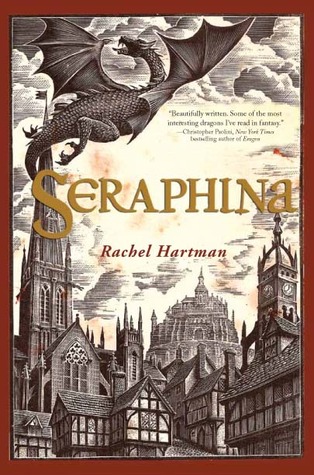
    • Book Review: “Seraphina” by Rachel Hartman

      Posted at 8:43 am by Laura, on February 22, 2013

      Seraphina by Rachel Hartman 12394100

      Publisher: Random House
      Publishing Date: July 2012
      Genre: young adult, fantasy
      ISBN: 9780375866562
      Goodreads: 4.12
      Rating: 
      ★★★★★

      Four decades of peace have done little to ease the mistrust between humans and dragons in the kingdom of Goredd. Folding themselves into human shape, dragons attend court as ambassadors, and lend their rational, mathematical minds to universities as scholars and teachers. As the treaty’s anniversary draws near, however, tensions are high.

      Seraphina Dombegh has reason to fear both sides. An unusually gifted musician, she joins the court just as a member of the royal family is murdered—in suspiciously draconian fashion. Seraphina is drawn into the investigation, partnering with the captain of the Queen’s Guard, the dangerously perceptive Prince Lucian Kiggs. While they begin to uncover hints of a sinister plot to destroy the peace, Seraphina struggles to protect her own secret, the secret behind her musical gift, one so terrible that its discovery could mean her very life.

      Seraphina, a remarkable musician and uniquely perceptive human, joins the Goredd court as Music Mistress, assistant to the royal court composer. Her arrival coincides with the death of Prince Rufus, an honorable man who aimed to maintain peace between the dragons and Goreddis. With the help of her teacher Orma, a dragon in human form, and her friends Prince Lucian Kiggs and Princess Glisselda, Seraphina helps to uncover the mystery behind Prince Rufus’s murder while keeping her own dragon secrets under wraps. The fate of the kingdom and its uneasy relations with dragons falls on her shoulders.

      Seraphina is a wonderfully fantastic conglomeration of medieval lifestyle, Restoration-esque religious zeal, steampunk machinery, Enlightenment philosophy, beautifully lush musical diction, and high fantasy atmosphere. Phew. It may seem daunting and overwhelming, this 450-page first installment, but the second the reader steps into Seraphina’s inquisitive and perceptive mind, one becomes part of that world. The language, the scenery, the lifestyle — it all becomes incredibly familiar, as if one has lived this sort of life before. This novel was refreshing. Young adult high fantasy, written well, is very rare. Hartman wrote the book seeming to understand that young adult readers can be intelligent too, can desire the full range of emotional complexity, can understand rich diction, and can hear the music described in the book in their heads. Oh, it was wonderful!

      Though there are no dragons in the real world, Seraphina’s struggles as half dragon are immensely relatable. This is a coming-of-age piece, a true painting of self-discovery and self-acceptance. We journey through her neat separation of living the life of an ordinary human, and jumping over to her teacher Orma’s instructions on how to maintain “ard” (a calming, logical, meditative state dragons accomplish) so that her dragon side is under control. As the story progresses, these two parts of her life merge, and she must come to an understanding with who she is in order to move forward.

      The saints, slang, and cast of characters are introduced and given a brief description quite early in the book and rarely explained again. A massive thanks to Hartman for providing a glossary at the back of the book, containing the index of characters, the saints and what they are for, and the human and dragon slang in Goredd. Halfway through the book I stopped referring to this helpful section because it was no longer necessary to understand the story. Hartman truly immerses the reader into the world.

      Absolutely stunning.

      Posted in books, Reviews 2013 | 0 Comments | Tagged book review, books, genre: fantasy, genre: young adult, goodreads, review
    • Book Review: “The Statistical Probability of Love at First Sight” by Jennifer E. Smith

      Posted at 8:32 pm by Laura, on February 6, 2013

      The Statistical Probability of Love at First Sight by Jennifer E. Smith 10798416

      [Otherwise written as “Stat Prob of ❤ @ 1st Sight”]

      Publisher: Poppy, Little, Brown
      Publishing Date: January 2012
      Genre: young adult, romance
      ISBN: 9780316122399
      Goodreads: 3.79
      Rating: 
      ★★★★★

      Today should be one of the worst days of seventeen-year-old Hadley Sullivan’s life. Having missed her flight, she’s stuck at JFK airport and late to her father’s second wedding, which is taking place in London and involves a soon-to-be stepmother Hadley’s never even met. Then she meets the perfect boy in the airport’s cramped waiting area. His name is Oliver, he’s British, and he’s sitting in her row.

      A long night on the plane passes in the blink of an eye, and Hadley and Oliver lose track of each other in the airport chaos upon arrival. Can fate intervene to bring them together once more?

      Quirks of timing play out in this romantic and cinematic novel about family connections, second chances, and first loves. Set over a twenty-four-hour-period, Hadley and Oliver’s story will make you believe that true love finds you when you’re least expecting it.

      Hadley, whether consciously because she really doesn’t want to attend her father’s wedding or unconsciously because of several other factors, is four minutes late for her plane to London. Frustrated with the entire situation, not to mention the still bitter wounds of the divorce, Hadley books a seat on the next flight out and waits in the terminal. Across from her, disheveled and similarly packed for a big event, sits a boy who offers to help her with her luggage. From his accent to his charm, his helpful distractions and philosophical life lessons, Oliver begins to brighten Hadley’s life in ways she never thought possible. What’s even more is how much she brightens his.

      This book is my dream meet-cute. Hadley’s 24 hours with Oliver is exactly how I want to meet the love of my life (and obviously my love will be British). Each hour of Hadley’s trip is documented in the book, along with her hopes and dreams, her resentment for the divorce, her change in attitude towards her father’s new bride, her interactions with her mother, all the anxieties of travel mixed with the nonchalance around strangers. It was beautifully written, clever, and incredibly entertaining. I truly felt I was there with Hadley every step of the way.

      As the story progresses in time, we learn more about Hadley’s parents’ divorce, her father’s struggles, her mother’s efforts to move on, and even Hadley’s confusion. The back-story for her bitterness is revealed as she begins to fall in love with Oliver, who shows her a new outlook on life. It’s as if the more she opens up and accepts her stepmother and forgives her father, the more we begin to sympathize with her situation. She no longer comes across as a whiny teenager — but instead, a more wholesome being.

      I cannot express how happy this book made me feel. Such a simple story, yet with a complex plot lovable characters!

      Posted in books, Reviews 2013 | 2 Comments | Tagged book review, books, genre: romance, genre: young adult, goodreads, review
    • ARC Book Review: “Children of Liberty” by Paullina Simons

      Posted at 6:45 pm by Laura, on February 3, 2013

      Children of Liberty by Paullina Simons 15818274

      Publisher: William Morrow, HarperCollins
      Publishing Date: February 26, 2013
      Genre: fiction, history, romance, politics
      ISBN: —
      Goodreads: —
      Rating: 
      ★★

      At the turn of the century and the dawning of the modern world, Gina from Belpasso comes to Boston’s Freedom Docks to find a new and better life, and meets Harry Barrington, who is searching for his.

      The fates of the Barringtons and Attavianos become entwined, on a collision course between the old and new, between what is expected and what is desired, what is chosen and what is bestowed, what is given and what is taken away.

      As America races headlong into the future, much will be lost and much will be gained for Gina and Harry, whose ill-fated love story will break your heart.

      Gina, a young Italian girl on the brink of womanhood, steps onto the Boston shores excited for the future of opportunity ahead of her. The first American she meets, and whose story forever entangles her own, is Harry Barrington, son of the wealthy Herman Barrington and leader of the Barrington town just outside of Boston’s city limits. Her eagerness to learn everything and headstrong, forward-thinking personality, mixed with Harry’s studious and philosophical endeavors, bring these two together. Thus begins a whirlwind romance and a daring adventure in the uncertain, politically unrest future.

      Although it was a great opportunity to read about the interesting view points and backstory for what brought Alexander Barrington‘s parents together, this book felt a bit unnecessary. In The Bronze Horseman, the first of the Alexander and Tatiana epic romance trilogy, the reader discovers Alexander’s true American identity, that his parents were Italian and American, that they fled America for Russia due to their political beliefs, and that nothing turned out the way they expected. While it was fascinating reading this prequel to the trilogy — who wouldn’t be curious about how the parents of favorite beloved characters met and fell in love? — it felt long and indulgent.

      “Long” is really saying something, too. The Bronze Horseman and the other two books are tomes, really fitting the Russian stereotypes for epic romances. This book, however, was rather thin, and I still felt lulled to sleep. I’m sure if I brushed up on my American history, or cared more about politics, I could find some enjoyment from this novel. Unfortunately, the characters felt flat. I did not love them like I loved Alexander and Tatiana. I did not feel the love and connection between Gina and Harry. It was heartrendingly disappointing.

      I believe what Simons gave the reader in The Bronze Horseman was enough of a story for Gina and Harry and should have been left at that.

      Thank you William Morrow / HarperCollins for providing this book for review!

      Posted in books, Reviews 2013 | 0 Comments | Tagged advance reading copy, ARC, book review, books, genre: adult fiction, genre: fiction, genre: history, genre: romance, goodreads, review
    • ARC Book Review: “Requiem” by Lauren Oliver

      Posted at 1:30 pm by Laura, on January 29, 2013

      Requiem by Lauren Oliver 9593913

      Publisher: HarperTeen
      Publishing Date: March 5, 2013
      Genre: young adult, dystopian
      ISBN: 9780062014535
      Goodreads: —
      Rating: 
      ★★★★★

      After rescuing Julian from a death sentence, Lena and her friends fled to the Wilds. But the Wilds are no longer a safe haven—pockets of rebellion have opened throughout the country, and the government cannot deny the existence of Invalids. Regulators now infiltrate the borderlands to stamp out the rebels, and as Lena navigates the increasingly dangerous terrain, her best friend, Hana, lives a safe, loveless life in Portland as the fiancée of the young mayor. Requiem is told from both Lena’s and Hana’s points of view. The two girls live side by side in a world that divides them until, at last, their stories converge.

      See my reviews of Delirium and Pandemonium.

      Lena faces difficult decisions once she leaves New York and goes back to the Wilds with Julian, Alex, Raven, Tack, and the rest of her friends. First and foremost on her mind is survival, as she finds more and more Invalids are dying from hunger, thirst, abandonment, and rebellion. Her choices must be quick and her actions impulsive. Lena also must come to terms with what she feared most about deliria: the symptoms of jealousy and heartbreak. Meanwhile, Hana, cured and prepping for marriage, begins to worry. Worrying signifies a potential problem that the cure may not have worked for her. Hana then learns about the history of the young mayor’s previous wife, and her fears help her break from dependency on wealth and comfort and sacrifice everything she knows.

      After Pandemonium, I was worried Oliver would agonize the reader with a Team Julian or Team Alex plot. This is not the case. While Lena does come to realize what jealousy and heartbreak feel like, Oliver describes the pain with such beautiful prose that the issue no longer hangs on “which boy should I choose?” but rather muses on how one can overcome these feelings, especially when it had been ingrained since birth these feelings were symptoms of a disease. This push-and-pull attitude is so realistic and plausible that this third book rings with truth about love: it is never easy, and there is no such thing as a triangle. Humans can love in different ways.

      The major point of the book is formalizing a plan for revolution, and hoping the execution of said plan will work. Each day, each hour, the Invalids in the Wilds are under attack. Any minute could be the last. Lena, once a sweet-tempered character, is now independent, strong, a leader. It was such a joy watching her grow through each of the books.

      I truly enjoyed reading Hana’s perspective. She was the inside voice, the one still within the walled city of Portland, as well as a cured perspective. The language is stiff and bland. Her emotions are dulled. And yet her voice, in its plain-spoken and truthful way, is trust-worthy and interesting. Hana gives the reader the facts straight out. When she begins to analyze her dreams (which she is not supposed to have) and fears of her future husband-to-be Fred (and fear is an irrational emotion), she questions the validity of the cure. By searching through her husband’s past and facing his strength head-on, she grows to appreciate the Invalids’ purpose. The cure may take away love, it may lessen emotional turmoil, but it can leave behind a heartless being. Hana’s experiences within Portland shed light into these themes.

      This is not your typical love triangle, as many may have predicted from the first book alone. In fact, I’d hardly call this trilogy a love triangle at all. The Delirium trilogy is a series that examines love in all its forms, and the result of taking that love away. Freedom and love go hand-in-hand.

      Thank you HarperTeen for providing this ARC for review!

      Posted in books, Link, Reviews 2013 | 0 Comments | Tagged advance reading copy, ARC, book review, books, genre: dystopian, genre: young adult, review
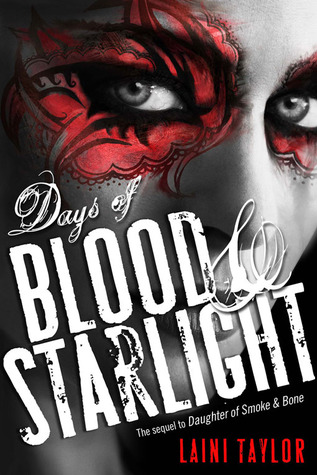
    • Book Review: “Days of Blood and Starlight” by Laini Taylor

      Posted at 9:21 pm by Laura, on January 19, 2013

      Days of Blood and Starlight by Laini Taylor 12812550

      Publisher: Little, Brown
      Publishing Date: November 2012
      Genre: young adult, fantasy, romance
      ISBN: 9780316133975
      Goodreads: 4.35
      Rating:
      ★★★★★

      While Karou and her allies build a monstrous army in a land of dust and starlight, Akiva wages a different sort of battle: a battle for redemption. For hope.

      But can any hope be salvaged from the ashes of their broken dream?

      Hidden away in an abandoned desert castle, Karou takes on the role Brimstone had trained her for in her previous form as Madrigal: a resurrectionist. Though Karou does it to keep her people, the chimaera, alive, Thiago has a more sinister plan in mind. Akiva, teamed with his brother, sister, and small squad of soldiers, do their best in Eretz to warn and save the remaining chimaera from the terrifying angel emperor’s mission of destruction. Through a series of whirlwind and unpredictable events, Karou and Akiva cross paths, and must come to a decision to bring peace to their world before it destroys humanity.

      Taylor’s world, her imagination and skill and detail, blows my mind. I am nearly speechless. While the first book was lighthearted, spunky, artistic, romantic, and mildly tragic, this second installment is dark, weary, painful, and full of loyalty and determination. Rich with characters — chimaera and angel alike — and intricate plots bouncing from the human world to Eretz, you’d imagine the reader would become confused. Taylor is so talented, I can guarantee every character mentioned will leave a mark in your mind. You will know Ziri from Razor, Thiago from Joram, secondary characters from other secondary characters. Their points of view are scattered throughout the book, each with distinctive voices and overlapping events.

      While this second book has a dark and bleak tone, especially in comparison to the first, Zuzana and Mik’s commentary and chapters bring enough warmth and happiness to the book to provide hope when Karou needs it most. Even Karou’s observations are sparked here and there with sarcastic one-liners she must keep to herself.

      Another brilliant aspect of Taylor’s plotting is her ability to surprise you with every chapter. This book was entirely unpredictable. Characters that seemed to only appear once and could be forgotten would actually crop up again, with something important to say or do, a key event to become a part of. Events once seen will rise again with an eerie explanation, a twist in plot, a change in tide.

      In a year, the world will see what will become of Karou, Akiva, and the hope they have to bring peace to Eretz…

      Posted in books, Reviews 2013 | 0 Comments | Tagged book review, books, genre: fantasy, genre: romance, genre: young adult, goodreads, review
    • Book Review: “Daughter of Smoke and Bone” by Laini Taylor

      Posted at 3:15 pm by Laura, on January 7, 2013

      Daughter of Smoke and Bone by Laini Taylor 8490112

      Publisher: Little, Brown
      Publishing Date: September 2011
      Genre: young adult, fantasy, romance
      ISBN: 9780316133999

      Goodreads: 4.09
      Rating:
      ★★★★★

      Around the world, black hand prints are appearing on doorways, scorched there by winged strangers who have crept through a slit in the sky.

      In a dark and dusty shop, a devil’s supply of human teeth grows dangerously low.

      And in the tangled lanes of Prague, a young art student is about to be caught up in a brutal otherwordly war.

      Karou, an art student in Prague, sketches beautiful creatures and monsters. Her friends think she’s imaginative, but the truth is these creatures are real. When Karou meets Akiva on one of her missions for the creatures, a sense of wholeness and terror fill her. Akiva, an angel and an enemy of Karou’s family, hopes to help Karou discover her past and her role in the never-ending war.

      Usually “teen paranormal romance” is poorly written, with obvious outcomes and cliche plots. Daughter of Smoke and Bone is entirely different. I have visited Prague and thoroughly loved the city — but one does not need to have traveled there to feel like you’re walking in the streets with Karou. Taylor paints a beautiful picture of the city, and the descriptions only heighten from there. As the reader is introduced to Karou’s adoptive family, the beasts, monsters, and creatures called chimaera, the story begins to unfold and build a new world.

      Drop everything you know about angels and devils. The angels are not the benevolent, holy beings of Scripture; devils are not sinful and ugly. It is all in the eye of the beholder, in this story: who are the real monsters? Taylor’s Karou, Akiva, Brimstone, Zuzana, and Madrigal may not all be human, not all angels, not all devils, but they have such deep humanity, such raw emotion, such powerful personalities, that it’s easy to see where Karou’s inner conflict builds.

      The plot is addicting, the characters engaging, the world — both real and magical — stunning. I cannot wait to begin the next book!

      Posted in books, Reviews 2013 | 0 Comments | Tagged book review, books, genre: fantasy, genre: romance, genre: young adult, goodreads, review
    • Book Review: “A Tale of Two Cities” by Charles Dickens

      Posted at 10:00 am by Laura, on January 5, 2013

      A Tale of Two Cities by Charles Dickens 8288370

      Publisher: (of this particular edition) Harper Press
      Publishing Date: (original) 1859, (of this particular edition) 2010
      Genre: historical fiction, Victorian, gothic
      ISBN: 9780007350896
      Goodreads: 3.69
      Rating:
      ★★★

      “It was the best of times, it was the worst of times…” With these famous words, Charles Dickens plunges the reader into one of history’s most explosive eras — the French Revolution. From the storming of the Bastille to the relentless drop of the guillotine, Dickens vividly captures the terror and upheaval of that tumultuous period. At the center is the novel’s hero, Sydney Carton, a lazy, alcoholic attorney who, inspired by a woman, makes the supreme sacrifice on the bloodstained streets of Paris.

      One of Dickens’s most exciting novels, A Tale of Two Cities is a stirring classic of love, revenge, and resurrection.

      From the moment Dr Manette is released from prison, a decade-long plot begins to unfurl surrounding English lawyer Sydney Carton, French aristocrat Charles Darnay, and Lucie Manette. The two men fight for the love of Dr Manette’s daughter Lucie, but outside circumstances with the French Revolution begin to interfere. Only Lady Guillotine, the icon of the Republic, can solve end the battle.

      Admittedly, I began this book thinking it would be all about love and heartbreak. It is referred to several times in other favorite books of mine. However, this is Dickens, and Dickens is so much more than a simple love story author. I have learned from my Victorian literature classes that, to read Dickens and fully appreciate his work, one must read slowly and split it with another book. His work was read serially, just like TV episodes today are aired. I practiced this method again (breaking up every few chapters with a chapter of Harry Potter and the Chamber of Secrets — vastly different genre) and it certainly helped me enjoy the novel. But Two Cities was nothing like I’d imagined.

      I was most interested in all the scenes containing Darnay, Carton, and Lucie, of course. The error in paying close attention to those scenes meant lots of confusion towards the end when the complicated plot began to unravel and reveal itself in the final chapters. I did not pay close attention to Mr Lorry — “only a man of business” — or Madame DeFarge — always knitting, knitting, knitting — nor do I know enough about the French Revolution. Because of my personal flaws, I could not enjoy the novel as much as I should have.

      Dickens is a master with characters, though. He makes everyone incredibly memorable, even archetypal. We know, as a reader, that every time DeFarge appears, she’ll be knitting. She’s grouchy and revengeful. We know that when Mr Lorry appears, he wants to do the right thing by man but wants to keep his hands clean, so he will only do what his business will allow him to do. We know Darnay to be a kind and gentle person, easy to fall in love with and difficult to hate. Carton knows this, and although a drunkard, he is a good man at heart. This makes the love triangle heartbreaking to watch — neither man wants to fight the other, they have mutual respect in their love for Lucie, and it’s all so personal, raw, and human. It makes Carton’s sacrifice unbearable.

      After I spend some time researching the French Revolution, I will come back to this book and try again. I truly think that if I understood my history and pay closer attention to the outside plots that later converge, I could love this book.

      Posted in books, Reviews 2013 | 0 Comments | Tagged book review, books, genre: adult fiction, genre: classics, genre: fiction, genre: history, review
    ← Older posts
    Newer posts →
    • Hello, I’m Laura!

      I'm a bookish bookworm and book hoarder. By day I'm a literary agent, and by night I'm forever rearranging my bookshelves. I could talk your ear off about Gothic literature, and in my past life people thought I'd become a professional musician. I have a fluffy black cat named Rossetti, I love to travel, tea is my drink of choice, British TV is the best, and I'm always down for chips-and-queso nights. Welcome to Scribbles & Wanderlust! Grab your favorite hot beverage and let's chat books!
    • Search the Blog

    • Currently Reading

    • Book Review Rating Key

      ★★★ — It’s good
      ★★★★ — It’s great
      ★★★★★ — OMG LOVE!!!

    • Recent Posts

      • MSWL for 2026
      • Favorite Reads of 2025
      • Deal Announcement: Nina Moreno, YA Romance
      • Deal Announcement: Sharon Choe, YA Fantasy
      • Deal Announcement: Hanna R. Neier, MG Historical/Contemporary

Blog at WordPress.com.

Scribbles & Wanderlust
Blog at WordPress.com.
  • Subscribe Subscribed
    • Scribbles & Wanderlust
    • Join 1,202 other subscribers
    • Already have a WordPress.com account? Log in now.
    • Scribbles & Wanderlust
    • Subscribe Subscribed
    • Sign up
    • Log in
    • Report this content
    • View site in Reader
    • Manage subscriptions
    • Collapse this bar
 

Loading Comments...