Scribbles & Wanderlust
  • Home
  • About
  • Clients and Representation
  • Book Reviews
    • Reviews 2012
    • Reviews 2013
    • Reviews 2014
    • Reviews 2015
    • Reviews 2016
    • Reviews 2017
    • Reviews 2018
    • Reviews 2019
    • Reviews 2020
    • Reviews 2021
    • Reviews 2022
    • Reviews 2023
    • Reviews 2024
    • Reviews 2025
  • Features
    • Deal Announcement
    • End of Year Book Survey
    • If We Were Having Coffee
    • This Season’s Rewind
  • Discover a New Read
    • Adult
    • Young Adult
    • Middle Grade
  • Category: Reviews 2012

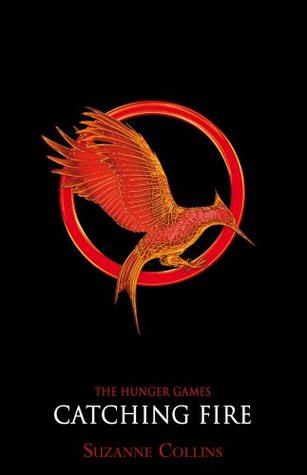
    • Book Review: “Catching Fire” by Suzanne Collins

      Posted at 3:39 pm by Laura, on April 8, 2012

      Catching Fire by Suzanne Collins

      Against all odds, Katniss Everdeen and Peeta Mellark are still alive. Katniss should be relieved, but now there are whispers of a rebellion against the Capitol – a rebellion that Katniss and Peeta may have helped create.

      As the nation watches Katniss and Peeta, the stakes are higher than ever. One false move and the consequences will be unimaginable.

      Spoilers ahead.

      I have heard and read many reviews about the second book accusing it be a “repeat” of book one, or “duller in comparison,” and even the worst, “falls into the second-of-every-trilogy-sucks category.”

      Let me just say that I completely disagree. The seconds in trilogies, I’ve noticed, build tension and anticipation, leaving the reader hanging at the end, anxiously awaiting the next and final installment. As I type this, I would much rather begin Mockingjay than wait till tomorrow when the book is in my presence! So as far as an unresolved plot, as many suggest, yes it’s there but we should keep in mind this is a trilogy, not a stand-alone.

      Also, it most certainly is not a repeat. If anything, the only concept that’s a repeat is that Peeta and Katniss are back in the Games. We’re introduced to the day-to-day life after the first Games, the suffering that comes with the success within a starving District. In Hunger Games, the brief glimpse of District 12 life is enough for us to sympathize and root for Katniss to win. Changes occur, rebellions begin, knowing who to trust and who to talk to (and where!) threatens Katniss’s life.

      The Games are entirely different as well – new characters (among them is a favorite of mine, Finnick Odair) bond with Katniss and Peeta and form alliances that have never happened before. The second book truly reveals the heightened sensations of rebellion, anger, madness, struggle, love, and hate – each a step up from the game of survival that encompassed the first book.

      Rating: ★★★★★
      Goodreads: 4.38 of 5

      Posted in Reviews 2012 | 3 Comments | Tagged book review, books, genre: dystopian, genre: young adult, goodreads, review
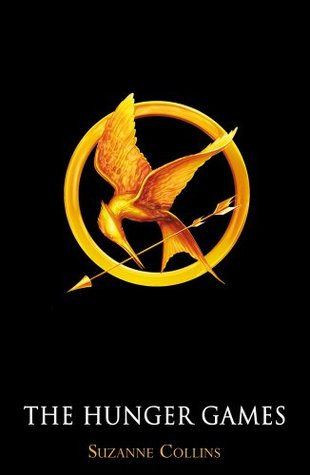
    • Book Review: “The Hunger Games” by Suzanne Collins

      Posted at 7:29 am by Laura, on April 4, 2012

      The Hunger Games by Suzanne Collins

      In a dark vision of the near future, twelve boys and twelve girls are forced to appear in a live TV show called the Hunger Games. There is only one rule: kill or be killed.

      When sixteen-year-old Katniss Everdeen steps forward to take her sister’s place in the games, she sees it as a death sentence. But Katniss has been close to death before. For her, survival is second nature.

      I had read this last June – the entire trilogy in four days – and after I saw the movie I had to re-read it. I wanted to absorb the book once more, and at a slower pace. This way, I could appreciate the story more and focus less on how tense and anxious I felt while reading the thriller.

      What makes Hunger Games so successful as a young adult novel is its first person, present tense narrative. The immediacy of the plot and the obsessive thoughts bring the reader straight into the moment, down to every single decision Katniss makes in the Games. Her honest mental contemplations, straight-forward descriptions, and skepticism in trusting others is refreshing. Sometimes, this sort of writing lacks in literature. There can be an overabundance of descriptions but little development of character. Other times, there is no sustenance of much of anything.

      The characters – most especially Katniss and Peeta – are well-rounded as well as flawed. Katniss has strength, survival instincts, and unconditional love for her family. She’s a fighter. However, she is blind to true kindness, and at times can be cruel to others due to this weakness. Peeta is the opposite: he’s open and honest, wears his heart on his sleeve, and while he lacks survival instincts, he is honorable and understanding. The problem, though, is that he is rather naive, and too trusting of others’ intentions. These characteristics will play out across the trilogy, but I just want to point out that while both characters are flawed and may not be the absolute best of role models, we must keep in mind that the situations they are in and the fully developed attributes lend to excellently formed personalities to which a reader can relate.

      This dystopian narrative also lends itself to the possibility of where this country (and even this world) may be headed. Like Brave New World, 1984, and Lord of the Flies, these scenarios could actually happen. Consider society’s obsession with reality TV. I’m not just speaking of “Jersey Shore” and “Housewives of ___” but also “Survivor” and “American Idol.” Shows that follow real people around in a game, where the winner gets money, fame, and recognition, even if only temporarily. Toss in our political unrest domestically and internationally, and we’ve the perfect recipe for Hunger Games.

      Back to the book – I would highly recommend this for everyone, especially new readers. The immediacy of the narrative easily prevents the reader from putting the book down, flipping page after page, soaking up the story, begging for more.

      Rating: ★★★★★
      Goodreads: 4.54 of 5

      Posted in Reviews 2012 | 1 Comment | Tagged book review, books, genre: dystopian, genre: young adult, goodreads, review
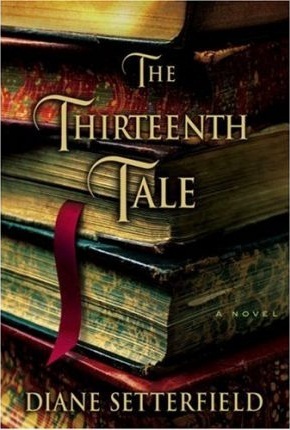
    • Book Review: “The Thirteenth Tale” by Diane Setterfield

      Posted at 4:39 pm by Laura, on March 28, 2012

      The Thirteenth Tale by Diane Setterfield

      Biographer Margaret Lea returns one night to her apartment above her father’s antiquarian bookshop. On her steps she finds a letter. It is a hand-written request from one of Britain’s most prolific and well-loved novelists. Vida Winter, gravely ill, wants to recount her life story before it is too late, and she wants Margaret to be the one to capture her history. The request takes Margaret by surprise–she doesn’t know the author, nor has she read any of Miss Winter’s dozens of novels.

      Late one night while pondering whether to accept the task of recording Miss Winter’s personal story, Margaret begins to read her father’s rare copy of Miss Winter’s Thirteen Tales of Change and Desperation. She is spellbound by the stories and confused when she realizes the book only contains twelve stories. Where is the thirteenth tale? Intrigued, Margaret agrees to meet Miss Winter and act as her biographer.

      As Vida Winter unfolds her story, she shares with Margaret the dark family secrets that she has long kept hidden as she remembers her days at Angelfield, the now burnt-out estate that was her childhood home. Margaret carefully records Miss Winter’s account and finds herself more and more deeply immersed in the strange and troubling story. In the end, both women have to confront their pasts and the weight of family secrets. As well as the ghosts that haunt them still.

      I read this book a few years ago and was absolutely in love with it. This is a novel for bibliophiles and neo-gothic lovers! The narrator, Margaret, is constantly lost in books and stories, and is more interested in fictional or dead lives than those of living, breathing humans. So when she accepts Miss Winter’s request, little did she know that she would come to care more and more for human companionship and stories outside of bound pages.

      There are so many elements of gothic literature within this work. Even though Miss Winter and Margaret blatantly state and share passions for Jane Eyre, Wuthering Heights, The Woman in White, The Turn of the Screw, and Dickens and Austen, each of these novels come into play within this book. I read this novel before I’d read Woman in White or Turn of the Screw, and I could still follow along just fine – there is nothing to fear! But after having read all the novels referenced, I had an uncanny feeling every time I noticed the parallels and similarities. It’s shocking, and so subtle that it is woven into the text brilliantly.

      The great thing about returning to this novel after a few years was that, once again, I was sucked into the mystery. I could not remember what the explosive ending was. I remembered twins and burning libraries and haunted governesses, and that the author really had something to say and needed to say it before her death. I remembered that Margaret experience episodes similar to that of Victorian women, and that the doctor politely laughed during her condition. And, of course, I remembered all the book love. Everything that is said about books, I wholeheartedly relate to. I’m sure other bookworms can, too.

      But the ending! Oh, all the tension and build-up was worth it! To experience that same shock and horror and heartbreak was wonderful. (Can you really say that?)

      Rating: ★★★★

      Goodreads: 3.9 of 5


      Posted in Reviews 2012 | 4 Comments | Tagged book review, genre: adult fiction, genre: fiction, genre: gothic, goodreads, review
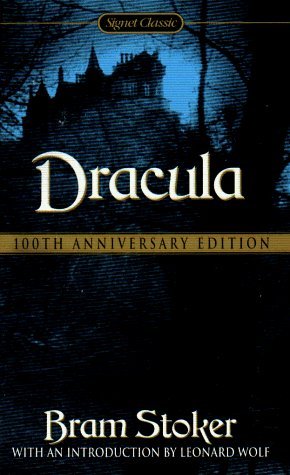
    • Book Review: “Dracula” by Bram Stoker

      Posted at 3:14 pm by Laura, on March 25, 2012

      Dracula by Bram Stoker

      Count Dracula has inspired countless movies, books, and plays. But few, if any, have been fully faithful to Bram Stoker’s original, best-selling novel of mystery and horror, love and death, sin and redemption. Dracula chronicles the vampire’s journey from Transylvania to the nighttime streets of London. There, he searches for the blood of strong men and beautiful women while his enemies plot to rid the world of his frightful power.

      Today’s critics see Dracula as a virtual textbook on Victorian repression of the erotic and fear of female sexuality. In it, Stoker created a new word for terror, a new myth to feed our nightmares, and a character who will outlive us all.

      Nothing like I thought it would be! I was expecting endless detail of blood and murder and a stalking vampire, enough to frighten me in my dreams and turn them into nightmares!

      However, I am not saying that this novel was not chilling. There were moments of pure terror that I had to put the book down for a few minutes and turn on lights. Everything about this novel involves repression – of sexuality, sensuality, religion, science – and I can certainly say the some of the most terrifying images involved these repressions. Take blood transfusions: we do this all the time in order to test for disease, disorders, and give blood to another to save lives. However, in 1897, this was extremely new and controversial; blood types were not yet discovered, and one false transfusion would involve death! Luckily this did not happen in the novel, but I was intensely fearful that the act of transferring blood from one person to another would lead to a vicious death. Another image was also extremely erotic and dually disgusting: Dracula’s act of ripping off his shirt so that Mina would suck the blood from his chest. While an extremely sensual image – and well-acted in various plays when the Dracula character is played by an attractive young man – it is also revolting, for Dracula is an old, withering, smelly aristocrat with hairy palms.

      This is quite the adventure novel, as well! Old World meets New World, science meets religion, the most advanced technology of the time (phonographs to record diary entries, women learning to type, blood transfusions) meets folklore – it’s all here. This novel can easily be adapted to modern times, and I think this is why our fascination with vampires (particularly Dracula) continues today.

      Rating: ★★★★

      Goodreads: 3.87 of 5

      Posted in Reviews 2012 | 0 Comments | Tagged book review, genre: classics, genre: fiction, genre: gothic, goodreads, review
    • Book Review: “The Dressmaker” by Kate Alcott

      Posted at 8:07 am by Laura, on March 17, 2012

      The Dressmaker by Kate Alcott

      Tess, an aspiring seamstress, thinks she’s had an incredibly lucky break when she is hired by famous designer Lady Lucile Duff Gordon to be a personal maid on the Titanic’s doomed voyage. Once on board, Tess catches the eye of two men, one a roughly-hewn but kind sailor and the other an enigmatic Chicago millionaire. But on the fourth night, disaster strikes.

      Amidst the chaos and desperate urging of two very different suitors, Tess is one of the last people allowed on a lifeboat. Tess’s sailor also manages to survive unharmed, witness to Lady Duff Gordon’s questionable actions during the tragedy. Others—including the gallant Midwestern tycoon—are not so lucky.

      On dry land, rumors about the survivors begin to circulate, and Lady Duff Gordon quickly becomes the subject of media scorn and later, the hearings on the Titanic. Set against a historical tragedy but told from a completely fresh angle, The Dressmaker is an atmospheric delight filled with all the period’s glitz and glamour, all the raw feelings of a national tragedy and all the contradictory emotions of young love.

      What a thrill! This historical novel had everything I could ever hope for: a few days’ events on the Titanic, the sinking and its utter chaos, the rescue on the Carpathia, the hearings that followed the arrival in New York City, the fashion industry and its fluctuations in 1912, suffragists and women’s rights movements, journalism tactics, the law of the time, British class divisions and America’s lack-thereof, and finally a love triangle.

      Phew.

      What sets The Dressmaker apart from other Titanic literature is Alcott’s focus on the aftermath of the sinking, rather than setting sail and the events on the ship. Roughly twenty pages were spent on the ship, and the following 280 included everything about the rescue, the hearings, and historical context of the changing dynamics in New York City. So many newspaper headlines, so many specific characters, several recognizable events – I was completely fascinated and had to put the book down several times to research the accuracy (rest assured, Alcott’s extremely accurate on the hearings) and information on the characters presented. In fact, in Alcott’s author’s note, she states:

      Much of the testimony in this book is taken directly from the transcripts of the U.S. Senate hearings in the aftermath of the sinking of the Titanic.

      It was from these hearings that ocean-liners are now required to have equipped and experienced crew, a sufficient number of lifeboats, and lifeboat drills before departure.

      The sinking of the Titanic has always been an interest of mine, but I was wholly ignorant of the hearings or even what happened to all the survivors. I know more about the ship itself than the people. This book sheds light to the era, dropping familiar names, places, and events, providing a complete cultural and historical experience.

      For any who may avoid the novel because of the hint of a love triangle, do not worry. That aspect of the story is most certainly not the main point or dominant thread of the novel. Tess is a strong character, a bold woman set to escape the class system and become independent. Imagine all the things she’s exposed to in New York City, a place without classes and full of opportunity. She seizes these moments.

      Rating: ★★★★★

      Goodreads: 3.44 of 5

      EDIT: “The Smithsonian” magazine has a whole article dedicated to the Titanic and its survivors. In this article is a spotlight on twins Michel and Edmond, both of whom are mentioned in this novel as well. I really do mean it when I say Alcott worked hard for historical accuracy!

      Posted in Reviews 2012 | 0 Comments | Tagged book review, books, genre: adult fiction, genre: fiction, genre: history, genre: mystery, genre: romance, genre: young adult, goodreads, review
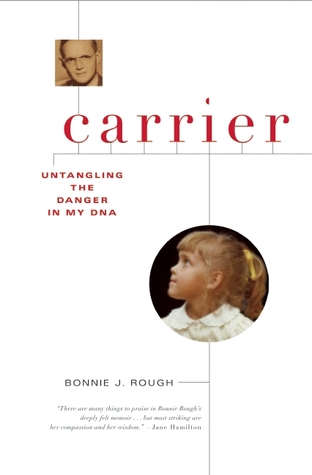
    • Book Review: “Carrier: Untangling the Danger in My DNA” by Bonnie J. Rough

      Posted at 11:14 am by Laura, on March 10, 2012

      Carrier: Untangling the Danger in My DNA by Bonnie J. Rough

      When Bonnie J. Rough receives the test results that confirm she is a carrier of the genetic condition hypohidrotic ectodermal dysplasia, or H.E.D., it propels her on a journey deep into her family’s past in the American West.

      At first glance, H.E.D. seems only to be a superficial condition: a peculiar facial bone structure, sparse hair, few teeth, and an inability to sweat. But a closer look reveals the source of a lifetime of infections, breathing problems, and drug dependency for Bonnie’s grandfather Earl, who suffered from the disorder. After a boyhood as a small-town oddity and an adulthood fraught with disaster, Earl died penniless and alone at the age of 49. Bonnie’s mother was left with an inheritance that included not just the gene for H.E.D., but also the emotional pain that came from witnessing her father’s misery.

      As Bonnie and her husband consider becoming parents themselves, their biological legacy haunts every decision. The availability of genetic testing gives them new choices to make, choices more excruciating than any previous generation could have imagined. Ultimately, Carrier is a story of a modern moral crisis, one that reveals the eternal tension between past and future.

      This book is for anyone who is pro-choice, a supporter of reproductive rights, or on the fence about these issues and how to deal with them. I think even pro-life supporters could take a peek at this, too! There is enough conflict in here for every reader to understand that this type of dilemma can be confusing and heartbreaking.

      Rough brilliantly crafted three narratives – with hers as the main thread – in this braided-essay style memoir. The reader is introduced to the medical dilemma, hypohidrotic ectodermal dysplasia, that haunts the piece and the minds of each narrative. We meet the suffering Earl, Rough’s grandfather with HED; the passionately loving and paradoxically angsty Paula, Rough’s mother; and the worrisome, adoring, creative Bonnie (Rough). Earl’s narrative consists mostly of fiction pieced together by stories Rough’s family tells her – Rough was too young to know any of these stories when Earl died – while Paula’s conflicting, fluctuating feelings of anger and love towards her “embarrassing” father flesh out the stress family members faced in response to the disorder. Bonnie, a witness to the familial struggle, and a carrier of the gene, deals with the conflict of bringing another life into this world with her husband, Dan. There’s a 25% chance they will have a son with HED, and a 25% change they will have a carrier daughter. Armed with the latest medical technology and procedures, Dan and Bonnie try to come to a conclusion about their future pregnancies: should they terminate the pregnancy for the sake of the child’s future suffering and continuing to pass on the disorder for future generations, or should they continue with the pregnancy because they do not want to insult the history of their family and Bonnie’s brother Luke (who has HED)?

      With Earl and Paula’s narratives, the reader takes a step back in time and observes the familial struggles with everyday life and unique situations – financial hardships, drug abuse, hospital crises. Bonnie’s narrative becomes more personal, a search for an understanding of the situation, the medical options, and her own self. Her sections slowly turn into obsessive worry, complicating the dilemma more.

      I think this was very well-written! Rough crafted a tough, sensitive situation and explained her decisions thoroughly, tying all the loose ends and answering every argument. It was comforting to read this piece without having “pro-life!” or “pro-choice!” shoved down my throat. She provides her thoughts, facts, and detailed descriptions of every step of her journey to the decision.

      Rating: didn't like it it was ok liked it really liked it it was amazing (my current rating)

      Goodreads: 3.91 of 5

      Posted in Reviews 2012 | 0 Comments | Tagged book review, genre: nonfiction, goodreads, review
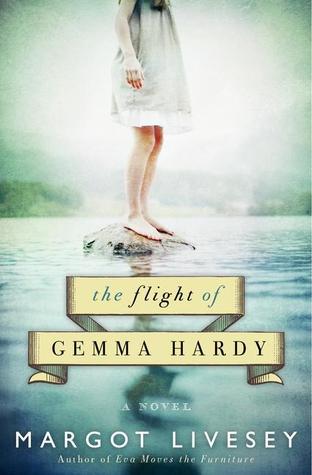
    • Book Review: “The Flight of Gemma Hardy” by Margot Livesey

      Posted at 10:06 pm by Laura, on March 6, 2012

      The Flight of Gemma Hardy by Margot Livesey

      Fate has not been kind to Gemma Hardy. Orphaned by the age of ten, neglected by a bitter and cruel aunt, sent to a boarding school where she is both servant and student, young Gemma seems destined for a life of hardship and loneliness. Yet her bright spirit burns strong. Fiercely intelligent, singularly determined, Gemma overcomes each challenge and setback, growing stronger and more certain of her path. Now an independent young woman with dreams of the future, she accepts a position as an au pair on the remote and beautiful Orkney Islands.

      But Gemma’s biggest trial is about to begin . . . a journey of passion and betrayal, secrets and lies, redemption and discovery that will lead her to a life she’s never dreamed.

      There will be two parts to this review: 1) a review of this book as a stand-alone novel, and 2) a review as a partner/homage to Jane Eyre by Charlotte Bronte. I am extra critical for this, as I had to pay close attention to the book for academic purposes.

      Part One
      I quite enjoyed this historical fiction, coming-of-age, romance novel! Livesey paints a beautiful picture of the Scottish landscape. Scottish and Icelandic histories are scattered throughout, connecting each bit of the story together. I also found Gemma’s fascination with birds to be more than symbolic – they were very educational and meaningful as well. Her rough childhood in the late 1950’s boarding schools, through her years as a nanny in the 60s truly developed into a maturing experience. Gemma is an intelligent, strong-willed, lonely character. She knew many people, and people were friendly to her, but she always felt like an outsider. Some of my favorite parts included Scottish and Icelandic folklore, the blurred boundaries between reality and fantasy.

      My only complaint would be Gemma’s reasons for leaving first Hugh and then Archie. Livesey could have fleshed out the excuses more clearly. I did not get the sense that Gemma felt love for Hugh in the first place – fascination, maybe, but not love – and her reason for leaving him seemed hypocritical, naïve, and silly. She was unwilling to forgive him for a tiny slip-up in his past, which did not make sense to me whatsoever. Archie, however, appeared to actually love her, despite what Gemma thought. She seemed to love him too, or at least more so than Hugh – and her excuse to leave him (he lacked “passion”) also seemed miniscule. In fact, what she did to test him almost seemed risqué, childish, and far too forward. Passion is not the same as lust, and with Livesey’s lack of detail in describing Gemma’s innermost thoughts did not help in distinguishing the two.

      I can overlook this because only at the end does Gemma state plainly and directing that her reasons for fleeing both men were immature. I only wished that Livesey gave more reasonable excuses earlier in the book so that, as a reader, I wouldn’t be left wondering and bothered (in an annoyed way) throughout. This history, the detail, and Gemma’s character growth kept me going – I wanted to see what happened next on her journeys!

      Part Two (***contains spoilers***)
      As far as a homage to Jane Eyre, I could definitely see the similarities. The opening lines, in fact, are nearly the same: referring to not taking a walk that day. The first third of both stories involve a poor childhood in a boarding school, but succeeding in studies despite the hardships. The second portion of both books deal with governess-like positions for a rich, older man in a massive, lonely house; the man has a secret; there’s a family crisis. The third portion of both books show a state of independence, each woman given a new home with two women and a man, and a love ordeal with that man; then later, of course, fleeing back to the older man at the manor. The End.

      So, in short, Gemma Hardy and Jane Eyre contain the same skeleton of a story. Jane Eyre is my favorite novel, so of course I’m going to judge Gemma Hardy a bit harshly simply because so many rave reviews say it’s just like the classic. To which I have to say: no, it’s not.

      Jane is quiet, observant, respectful of herself and others, a moral compass not through religion but by her own actions, a woman desiring independence and seeking equality among friends. She sought family ties, wanted to repay debts, and did not scour for money only to be rich but to live as simply as possible without starvation. She loved Rochester and Rochester loved her – she only fled him because he was asking far too much of her: to become his mistress while his wife was still alive. For Jane, that is a huge moral and personal disrespect. She also had a platonic relationship with St John, and wanted to travel to India as a sister or friend, not as a wife, because in her eyes a wife is someone to love, not someone to only work alongside the husband.

      Gemma is loud, but still observant. She defends herself against attackers but seems to not have any self-respect or hesitation when it comes to new men. She desires independence and friendship as well, but it all seems to be about networking and money. She wanted to know more about her family history, yet somehow it came back to inheritances. Gemma claims to have loved Hugh, but in truth she seemed more infatuated and lustful than in love – there are descriptions of her looking at him, wanting to be kissed by him, doing everything she can to get his attention. She flees Hugh because he switched his WWII draft with a distant cousin, and she can’t marry a “liar.” But then, when she flees, all she does is lie and steal and harm others. Archie loves her, or at least I felt so, but she tested him by unbuttoning her shirt, claiming that if he doesn’t do the same then he has no passion. I would disagree. Archie and Gemma were more equals than Hugh and Gemma.

      I also found difficulties seeing this as a modern gothic novel. Yes, there were muddled family histories, but nothing as shocking as a wife locked in the attic. Yes, there were ghosts, but all of them were friendly. There was a manor, but it was not haunted, nor did it have a spooky past.

      (***no more spoilers***)

      Despite my criticism in Part Two, I stand by what I said in Part One. Gemma Hardy was an enjoyable read, a good adventure, and I liked it very much.

      Rating: didn't like it it was ok liked it really liked it (my current rating) it was amazing

      Goodreads: 3.7 of 5

      Posted in Reviews 2012 | 0 Comments | Tagged book review, books, genre: adult fiction, genre: fiction, genre: gothic, genre: history, genre: romance, goodreads, review
    • Book Review: “Carmilla” by Sheridan Le Fanu

      Posted at 8:34 pm by Laura, on February 28, 2012

      Carmilla by Sheridan Le Fanu

      A young Anglo-Austrian woman living at her father’s castle is the narrator of this novella. When a mysterious and beautiful stranger is stranded at the castle in odd circumstances and becomes a guest, the heroine quickly forms a close bond with her —but she subsequently discovers that her “friend” has a dark and lethal secret.

      I read this in two hours, standing still in the kitchen as my housemates cooked and ate around me. Time did not seem to pass at all, I was so engrossed.

      A classic vampire novella (and in recent light, a lesbian vampire novella apparently), this chilling, tale offers readers a whole new experience and conception of “vampire.” With the Twilight series, we’ve romanticized and de-villainized the vampire to a laughable degree. Anne Rice sexualized and humanized the vampire. Bram Stoker offered a classic capable of reworkings for every decade since – the fear of contagion, fear of AIDs, fear of homosexuality – that allows the reader to be awed and terrified of and attracted to the vampire ideal.

      Carmilla contained several popular ideas of the modern idea of vampire – being staked, puncturing humans with the teeth, sleeping in coffins – while dismissing other notions such as bursting into flames in the sun; Carmilla was perfectly capable of walking in the daylight.

      The history behind Carmilla’s character is haunting as well! The most intense image that is still seared into my brain is of her in her coffin, laying in a pool of blood several inches deep, eyes wide and skin healthy. So terrifying! Le Fanu wonderfully crafted thrilling images and suspenseful events in this short Gothic tale!

      Rating: didn't like it it was ok liked it really liked it it was amazing (my current rating) of 5

      Goodreads: 3.79 of 5

      Posted in Reviews 2012 | 0 Comments | Tagged book review, books, genre: adult fiction, genre: classics, genre: fiction, genre: gothic, genre: horror, genre: mystery, goodreads, review
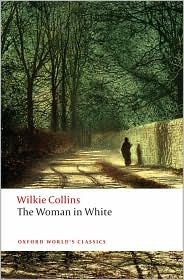
    • Book Review: “The Woman in White” by Wilkie Collins

      Posted at 12:48 pm by Laura, on February 22, 2012

      The Woman in White by Wilkie Collins

      The story begins with an eerie midnight encounter between artist Walter Hartright and a ghostly woman dressed all in white who seems desperate to share a dark secret. The next day Hartright, engaged as a drawing master to the beautiful Laura Fairlie and her half sister, tells his pupils about the strange events of the previous evening. Determined to learn all they can about the mysterious woman in white, the three soon find themselves drawn into a chilling vortex of crime, poison, kidnapping, and international intrigue.

      English Victorian literature: my favorite genre! I would have read this even if it was not assigned for my Gothic Literature course.

      Collins was a friend and pupil of Charles Dickens, and it shows in his writing style. At a time when authors were paid by the word and published serially in journals, long episodic novels such as this was the fashion. With each journal publication, a few sections of Woman in White would be published and read, much like TV episodes air weekly. The characters closely analyze situations from different angles, almost to the point of repetition – which serves as a reminder of this novel’s literary and historical context: the readers needed those reminders once in a while.

      Collins also employed a technique that was new in literature for the time, and rather common today: a story told from different narratives. For several chapters, the mystery was given by Walter Hartright, then his pupil Marian, followed by the villain, lawyers, and other characters whose roles become vital to the plot. For this particular story, which the law cannot legally touch, multiple narrators was necessary and skillfully done.

      This book was chilling, fascinating, and slow-paced. It cannot be read quickly. Very critical moments occurred without my noticing until after the fact. Gender roles blurred, the line between fantasy and reality was crossed, and intrigue kept the plot moving.

      One of literature’s most gender-bending characters, Marian Halcombe, starred alongside one of literature’s most lovingly hateful villains, Count Fosco. I thoroughly enjoyed their accounts in the narrative. Marian, with her mustache and desire for male independence, stealing out into the night and climbing across mansion roofs; Fosco, enormously obese yet light on his feet, cruel and charming all at once – their character depth drove the story forward. They constantly tip-toed around one another, analyzing the other’s every move like a chess game.

      And of course, there’s the mystery of the woman in white…which will only be revealed when read!

      Rating: didn't like it it was ok liked it really liked it it was amazing (my current rating) of 5

      Goodreads: 3.97 of 5

      Posted in Reviews 2012 | 2 Comments | Tagged book review, books, genre: adult fiction, genre: classics, genre: fiction, genre: gothic, genre: mystery, goodreads, review
    • Book Review: “In the Woods” by Tana French

      Posted at 9:25 pm by Laura, on February 17, 2012

      In the Woods by Tana French

      As dusk approaches a small Dublin suburb in the summer of 1984, mothers begin to call their children home. But on this warm evening, three children do not return from the dark and silent woods. When the police arrive, they find only one of the children gripping a tree trunk in terror, wearing blood-filled sneakers, and unable to recall a single detail of the previous hours.

      Twenty years later, the found boy, Rob Ryan, is a detective on the Dublin Murder Squad and keeps his past a secret. But when a twelve-year-old girl is found murdered in the same woods, he and Detective Cassie Maddox – his partner and closest friend – find themselves investigating a case chillingly similar to the previous unsolved mystery. Now, with only snippets of long-buried memories to guide him, Ryan has the chance to uncover both the mystery of the case before him and that of his own shadowy past.

      Fun fact: I read the second book (The Likeness) without realizing it was the second book and absolutely loved it. It’s one of my favorites and Cassie Maddox is also a favorite character of mine.

      That being said, the narrator Rob Ryan was a difficult character to relate to. His narrative was clinical and descriptive, and not very emotional. By the end of the novel, he blatantly states he would only tell the story the way he could see them, without opinions and bias. His relationship with Cassie is adorable – they would bounce one-liners, zingers, and banter back and forth constantly. The dialogue and chemistry were immensely entertaining during the sludge of “whodunit” ruts.

      Because of their relationship, Cassie was the most fascinating character. I think a part of it had to do with my familiarity of her narrative in the second book, but also because she was the most alive and most truthful character in the murder investigation. Rob’s murky past and turbulent present cause for some anxious monologues and self-reflection in the midst of clinical descriptions of facts, evidence, and interrogations.

      The murderer was not someone I would have guessed either. So many fingers pointed in so many directions that when the murderer was revealed, I was baffled. Even the explanation was startling! This was the moment in the work when psychological expertise took a heavy role. I have to applaud French on her ability to create such multidimensional and accurate (psychologically) characters, motives, and reactions!

      Rating: ★★★★ of 5

      Goodreads: 3.62 of 5

      Posted in Reviews 2012 | 0 Comments | Tagged book review, genre: adult fiction, genre: fiction, genre: mystery, goodreads, review
    ← Older posts
    Newer posts →
    • Hello, I’m Laura!

      I'm a bookish bookworm and book hoarder. By day I'm a literary agent, and by night I'm forever rearranging my bookshelves. I could talk your ear off about Gothic literature, and in my past life people thought I'd become a professional musician. I have a fluffy black cat named Rossetti, I love to travel, tea is my drink of choice, British TV is the best, and I'm always down for chips-and-queso nights. Welcome to Scribbles & Wanderlust! Grab your favorite hot beverage and let's chat books!
    • Search the Blog

    • Currently Reading

    • Book Review Rating Key

      ★★★ — It’s good
      ★★★★ — It’s great
      ★★★★★ — OMG LOVE!!!

    • Recent Posts

      • MSWL for 2026
      • Favorite Reads of 2025
      • Deal Announcement: Nina Moreno, YA Romance
      • Deal Announcement: Sharon Choe, YA Fantasy
      • Deal Announcement: Hanna R. Neier, MG Historical/Contemporary

Blog at WordPress.com.

Scribbles & Wanderlust
Blog at WordPress.com.
  • Subscribe Subscribed
    • Scribbles & Wanderlust
    • Join 1,203 other subscribers
    • Already have a WordPress.com account? Log in now.
    • Scribbles & Wanderlust
    • Subscribe Subscribed
    • Sign up
    • Log in
    • Report this content
    • View site in Reader
    • Manage subscriptions
    • Collapse this bar
 

Loading Comments...